Pashupatinath Temple: Kathmandu, Nepal
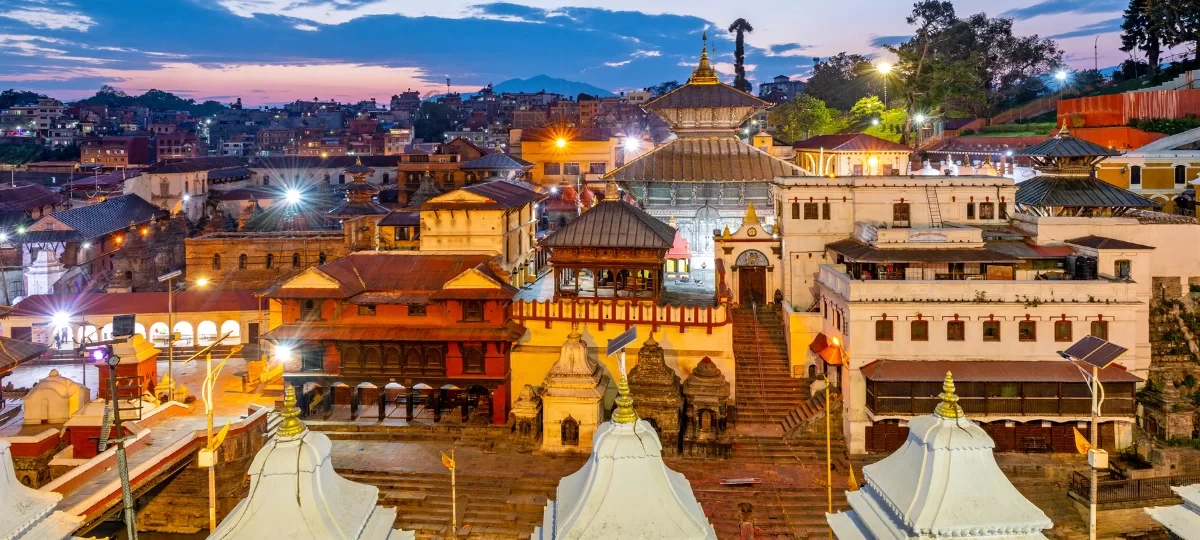
In the heart of Kathmandu, where ancient traditions meet modern life, lies one of the most sacred and spiritually powerful sites in South Asia—Pashupatinath Temple. With its golden rooftops, holy river, and smoke rising from cremation ghats, Pashupatinath is not just a temple. It’s a deeply moving experience, where every stone, every chant, and every flame tells a story of life, death, and beyond.
For Hindus around the world, this temple holds immense religious significance. And for curious travelers, it offers a rare and authentic glimpse into Nepal’s spiritual soul. Whether you come for prayer, peace, or understanding, Pashupatinath welcomes you with an atmosphere that is both mystical and grounding. Recognized as a UNESCO World Heritage Site, Pashupatinath is much more than a temple—it’s a living, breathing part of Nepal’s identity.
This blog takes you through everything you need to know about Pashupatinath—its location, history, legends, ceremonies, cremation rituals, festivals, and how to respectfully explore this sacred space.

Where Is Pashupatinath Temple Located?
Pashupatinath Temple is situated in Kathmandu, the capital city of Nepal. More specifically, it lies on the eastern side of the city near Tribhuvan International Airport, making it one of the most accessible spiritual sites in the country. The temple complex rests beside the Bagmati River, which is regarded as holy by Hindus and flows onward into the sacred Ganges River in India.
The area surrounding the temple is peaceful and culturally rich, and despite being in the capital city, the temple feels like a different world—one where spirituality shapes daily life.
History and Origin of Pashupatinath Temple
An Ancient Place of Worship
Pashupatinath is one of the oldest temples in Nepal, with its spiritual roots tracing back to at least the 5th century BCE. While the earliest physical structure was constructed around 400 CE, it is believed that worship and religious activities began here long before that.
Over time, the original wooden structures were destroyed—possibly by termites or natural decay. However, the faith of the people remained unshaken. In the 15th century, the temple was rebuilt using stone and metal, showcasing beautiful architecture and religious symbolism. Today’s temple still carries the essence of its long history and countless reconstructions, symbolizing the strength of devotion.
Mythological Origins: Lord Shiva Becomes a Deer
Pashupatinath’s spiritual significance is deeply tied to Hindu mythology. One popular legend says that Lord Shiva, one of the most powerful deities in the Hindu pantheon, once disguised himself as a deer and wandered into the forests of the Kathmandu Valley. Enchanted by the serenity of the place, he decided to stay. The gods eventually found him and requested his return to Mount Kailash. But before leaving, Shiva declared that the very place he had rested would become a sacred spot—and so the temple was built where he lay in his deer form.
Another story says that a Shiva Lingam (a symbolic stone representation of Lord Shiva) emerged naturally from the ground near the Bagmati River. When it was discovered, people saw it as a divine sign and began to worship it. A temple was later constructed around this sacred lingam.
These tales aren’t just stories—they are the foundation of deep spiritual connection for millions of people. They are why this temple is considered the eternal abode of Shiva in Nepal.
What Makes Pashupatinath Temple So Famous?
Lord Shiva as Pashupati
The temple is dedicated to Lord Shiva, specifically in his form as Pashupati, which means “Lord of All Living Beings”. In this compassionate form, Shiva protects not just humans, but every creature in the universe. This concept appeals to a wide range of people, especially those who see the divine in all forms of life.
Worshipping Pashupati is believed to bring blessings, remove sins, and bring peace to both the living and the departed. Many Hindus believe that praying here helps one attain moksha—freedom from the cycle of birth, death, and rebirth (samsara).
Flowing alongside the temple, the Bagmati River is considered profoundly holy, akin to the sacred Ganges in India. Its waters are believed to purify sins and cleanse the soul, and pilgrims frequently take a holy dip before offering prayers, reinforcing the river’s vital role in spiritual rituals and life ceremonies. The river’s association with divine energy, where Lord Shiva and his consort Parvati are said to have rested, further enhances its sacredness.
A Place to Die and Be Liberated
Pashupatinath holds a unique spiritual power. It’s considered one of the best places to die for a Hindu. Many elderly or terminally ill people come here to spend their final days in hope of dying near the temple. Being cremated on the banks of the Bagmati River, right beside the temple, is believed to ensure the soul’s liberation.
This belief gives Pashupatinath a spiritual gravity unmatched by most other temples in the world. It draws not only tourists and pilgrims, but people at the end of life seeking final peace.
Why Cremation Happens Here?
Unlike many cultures that hide death from public view, Hinduism sees death as part of a natural and sacred cycle. Cremation is a way of releasing the soul from the physical body, allowing it to move on in its journey.
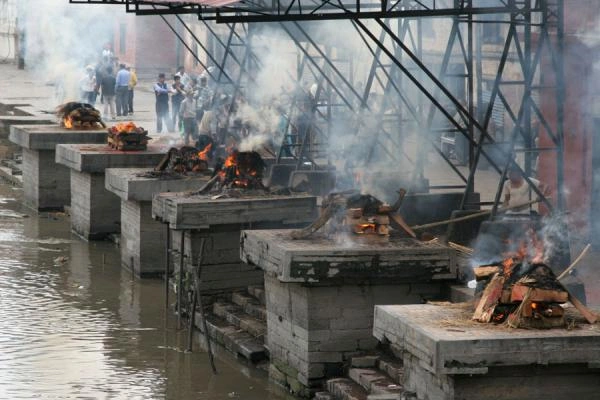
At Pashupatinath, this ritual is carried out on open-air platforms along the Bagmati River, known as ghats. Families bring the deceased, wash the body in the river, wrap it in white cloth, and place it on a wooden pyre. A sacred fire is lit, and prayers are chanted as the body returns to the five elements of nature.
Afterward, the ashes are scattered into the river, symbolizing the connection between the mortal world and the spiritual realm and reinforcing the eternal cycle of life and rebirth.
Witnessing this ceremony can be powerful, emotional, and even overwhelming. It offers a deep understanding of Hindu beliefs about death and the afterlife. Visitors are welcome to observe, but must do so respectfully and quietly, keeping a distance and avoiding photography.
A UNESCO World Heritage Site
In 1979, UNESCO recognized Pashupatinath as a World Heritage Site as part of the larger Kathmandu Valley Heritage Complex. This designation wasn’t just for its architecture but for its living cultural practices—rituals, music, art, and festivals—that continue to this day.
It is one of the few places where the past and present coexist so vividly, where daily life still follows traditions established centuries ago.
The Evening Aarati: A Spiritual Light Show
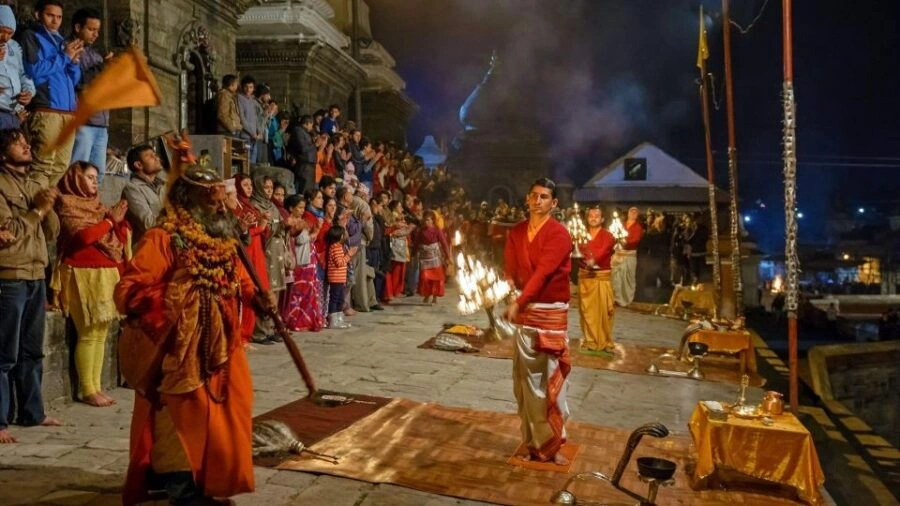
Every evening, as dusk settles over Kathmandu, the banks of the Bagmati River near Pashupatinath transform into a vibrant arena for the Evening Aarati. This mesmerizing spiritual ceremony typically begins after 5 PM, with the main ritual commencing promptly at 6 PM and lasting for approximately 30 minutes. Hundreds of devotees and curious tourists gather, patiently awaiting the unfolding spectacle.
The Aarati, a traditional Hindu ceremony of offering light to deities, is performed by a group of priests who stand on a platform in front of the main temple. They perform captivating circular motions with large copper lamps filled with burning ghee (clarified butter), creating a dazzling visual effect. Simultaneously, a group of musicians plays traditional Hindu instruments such as drums, cymbals, and flutes, accompanying singers in devotional bhajans (religious songs). Classical dancers often perform, adding another layer to the visual and auditory experience. The combined chanting of mantras and the rhythmic ringing of bells create a captivating, uplifting ambiance that fills the air.
What to Expect?
- Priests dressed in traditional clothing wave huge oil lamps in synchronized motions.
- Devotional songs and chants fill the air.
- Instruments like bells, drums, and flutes create a vibrant soundscape.
- Devotees and tourists join together in song, prayer, and reflection.
The ceremony is more than just a ritual—it’s a shared spiritual moment that lifts the soul. Many people describe it as one of the most peaceful and healing parts of their visit.
Maha Shivaratri: The Greatest Festival at Pashupatinath
What Is Maha Shivaratri?
Maha Shivaratri, or the Great Night of Shiva, is the most important festival celebrated at Pashupatinath. Occurring annually between February and March, on the 13th or 14th night of the lunar month of Phalgun, it marks a time of profound spiritual significance for Shiva devotees. This festival honors Lord Shiva’s cosmic dance—the Tandava—which symbolizes his roles as the creator, protector, and destroyer of the universe. It is believed that on this sacred night, Shiva performs this divine dance that sustains the cosmos.
It celebrates Lord Shiva’s cosmic dance and his role as the creator, preserver, and destroyer of the universe.
The scale of the Maha Shivaratri celebration at Pashupatinath is immense, with the entire temple complex buzzing with life. Thousands of pilgrims, Sadhus (Hindu holy men), and tourists converge, creating a vibrant melting pot of traditions. The atmosphere is intensely mystical and uplifting, filled with the continuous chanting of “Om Namah Shivaya” (a sacred mantra), the singing of devotional bhajans, and the mesmerizing sight of thousands of oil lamps illuminating the complex throughout the night.
What Happens During the Festival?
- Over 1 million people visit the temple, including thousands of sadhus, some walking from India.
- The temple is lit with oil lamps, creating a magical glow.
- Devotees chant “Om Namah Shivaya” all night long.
- Pilgrims take a holy dip in the Bagmati River.
- Cultural performances, processions, music, and food stalls fill the temple surroundings.
The energy is intense and unforgettable. It’s a time when Kathmandu transforms into a spiritual city, drawing seekers from around the world.
Daily Worship and Monthly Rituals
Pashupatinath Temple offers a variety of ways for devotees to worship and experience its spiritual energy, from daily rituals to significant monthly observances. Daily rituals include Nitya Puja (daily worship) and Abhishekam (a holy bath of the Shiva Lingam with milk, honey, ghee, yogurt, and holy water), symbolizing purification, devotion, and prosperity. Early morning visitors can witness the temple’s opening ritual at 4 AM, when the western gate is opened for pilgrims and tourists, and observe the idol adorned with jewels after 8:30 AM. Devotees can also request a “Farmayishi puja” at 10 AM, where a special ritual is performed in their name.
Daily Rituals
- 4:00 AM: Temple opens with early morning prayers.
- 8:30 AM: Idol of Pashupati is decorated with jewels and ornaments.
- 10:00 AM: Devotees can request special pujas (Farmayishi Puja).
- Throughout the day: Offerings are made using milk, flowers, incense, and water.
Special Days and Observances
- Mondays: Dedicated to Lord Shiva. Every Monday during this month, devotees visit Pashupatinath to offer water, milk, and bel leaves to the Shiva Lingam. Married women pray for their husbands’ well-being, while unmarried women seek a good spouse.
- Shrawan Month (July–August): Highly auspicious. Women pray for good husbands; others come to seek blessings for health, wealth, and love.
Table: Essential Visitor Information for Pashupatinath Temple
| Aspect | Details |
| Entry Fee | NRs 1000 for foreigners. Free for Nepalese and Indians. |
| Access Restrictions | Non-Hindus are not allowed inside the main temple area (inner sanctum). The rest of the complex is open to all visitors. |
| Opening Hours | Generally 4:00 AM – 9:00 PM, but the main temple (inner sanctum) closes between 12:00 PM – 5:00 PM. |
| Best Time to Visit | Early morning (6:00 AM – 8:00 AM for Bhor Aarati and fewer crowds) or late evening (6:00 PM – 7:00 PM for Sandhya Aarati). Winter (December-February), especially around Maha Shivaratri, is considered spiritually intense. Weekdays (Tuesday-Thursday) typically have lower crowds; Mondays are crowded but offer an authentic experience. |
| Photography | Strictly restricted in certain areas, particularly within the main temple premises and during religious ceremonies. Always seek permission before taking pictures of people, especially grieving families at cremation ghats. |
| Dress Code | Modest clothing is required; shoulders and knees should be covered for both men and women. |
| Footwear | Must be removed before entering the temple premises. Secure storage is often available near the entrance. |
| Conduct | Maintain a quiet and respectful demeanor. Avoid disrupting ongoing ceremonies or rituals. When walking around the temple or sacred structures, always move in a clockwise direction as a sign of respect. |
| Interacting with Sadhus | Approach with respect. Seek permission before taking photographs. A small tip may be expected for blessings or photos, as Sadhus often depend on these gifts. |
| Cremation Ghats | If visiting the cremation ghats along the Bagmati River, maintain a respectful distance. These areas hold great emotional significance for grieving families. |
The strict rules for non-Hindus regarding entry and photography highlight the temple’s primary function as a sacred place of worship rather than solely a tourist attraction, emphasizing the deep reverence required. The detailed etiquette underscores the importance of cultural sensitivity for visitors, ensuring their presence doesn’t disrupt the spiritual sanctity.
Exploring the Pashupatinath Complex
The main temple is just one part of a huge complex with more than 500 shrines, temples, ghats, and ashrams. Here are some highlights you shouldn’t miss:
- Mukhalinga: The main idol with four faces symbolizing the elements—earth, fire, water, and air. This statue is bathed daily with milk and water from the Bagmati River as an important ritual.
- Guhyeshwari Temple: 17th-century temple dedicated to Sati Devi, Lord Shiva’s consort. Not open to non-Hindus.
- Gorakhnath Temple: 11th-century temple surrounded by forest; a peaceful spot is known for its serene forest landscape where deer often roam.
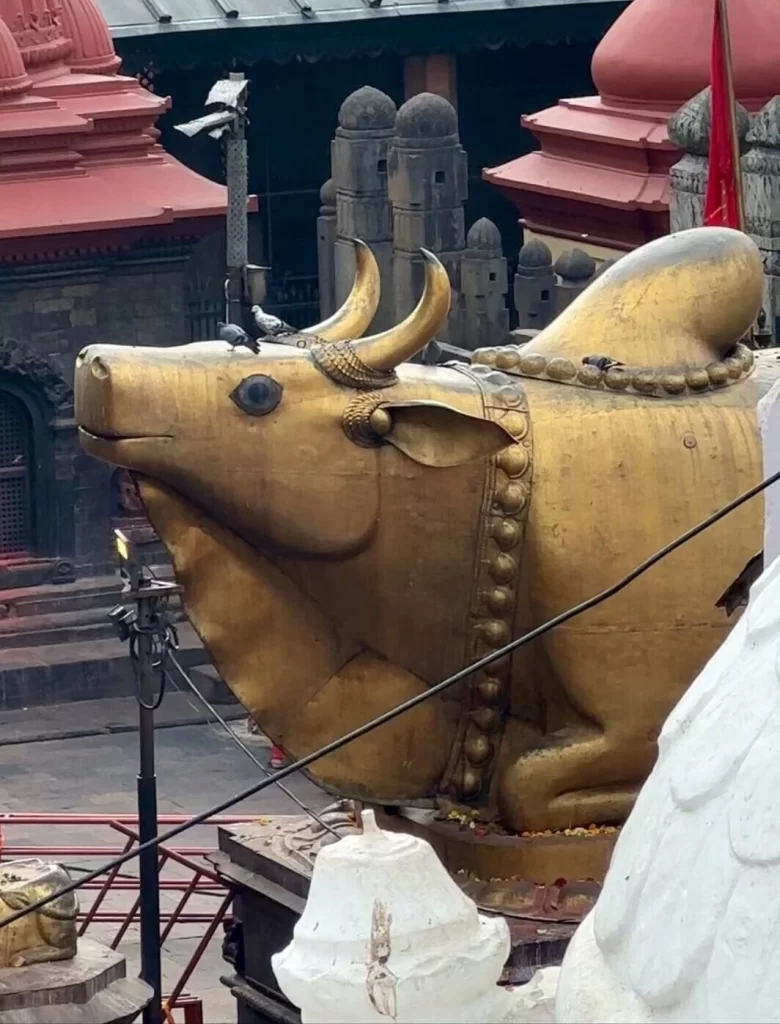
- Nandi Statue: The largest brass statue of Lord Shiva’s bull companion.
- Kirateshwar Mahadev: Dedicated to Lord Shiva in his Kirat (hunter) form, honoring the indigenous Kirat people. Legend states Shiva appeared here as a hunter, testing Arjuna’s devotion.
- 108 miniature Shiva Lingams: Representing different manifestations of Lord Shiva, which devotees often circumambulate as an act of devotion.
- Dakshinamurti Temple: Offers a rare representation of Shiva as a teacher, imparting wisdom, making it important for seekers of spiritual knowledge.
- Bachhareshwari Temple: Notable for its unique and unconventional features, including erotic paintings, skeleton decorations, and tantric figures.
- Buddha Shrine: Reflects Nepal’s harmony between Hinduism and Buddhism, where Lord Shiva is respected in some Buddhist traditions. This presence reflects Nepal’s unique religious harmony and syncretism, a subtle but powerful cultural detail.
- Panchadeval Temple: A unique five-temple compound.
- Rajarajeshwari Temple: Houses one of the nine Shakti Pithas.
- Deer Park: Home to deer, monkeys, and goats. Be cautious—monkeys may snatch food or belongings!
- Hilltop Viewpoint: For panoramic views of the complex and Bagmati River.
- Religious Market: Offers a variety of religious items, ritual supplies, and souvenirs. The complex is also home to numerous deer, goats, and monkeys, though visitors should be mindful of the latter, as some monkeys can be kleptomaniac.
Conclusion: A Place That Transforms You
Pashupatinath Temple isn’t just a tourist destination—it’s a place of deep reflection, powerful rituals, and cultural immersion. From cremation rites by the sacred river to the glowing oil lamps of the evening Aarati, the temple offers something that stays in your heart long after you leave.
It reminds us that life is sacred, death is natural, and every soul is on a journey.
Whether you’re a pilgrim seeking peace, a photographer drawn to culture, or a traveler with an open heart, Pashupatinath welcomes you.
For more detailed info and a tour guide to Pashupatinath Temple, contact us.