
How Much Should I Tip My Guide and Porter in Nepal?
If you’re planning the Everest Base Camp trek or any trek in Nepal, one of the most common questions is: “How much should I tip my guide and porter?” Since Nepal doesn’t have a mandatory tipping culture, this can be confusing for first-time trekkers.
While tipping isn’t an obligation, it has become a meaningful way for trekkers to show appreciation to the hardworking guides and porters who make the journey possible. After all, without them, most trekkers would struggle to reach their dream destination in the Himalayas.
In this guide, I am breaking down everything you need to know about tipping guides and porters in Nepal—from why it matters to how much you should give.
Why Tipping Matters in Nepal?
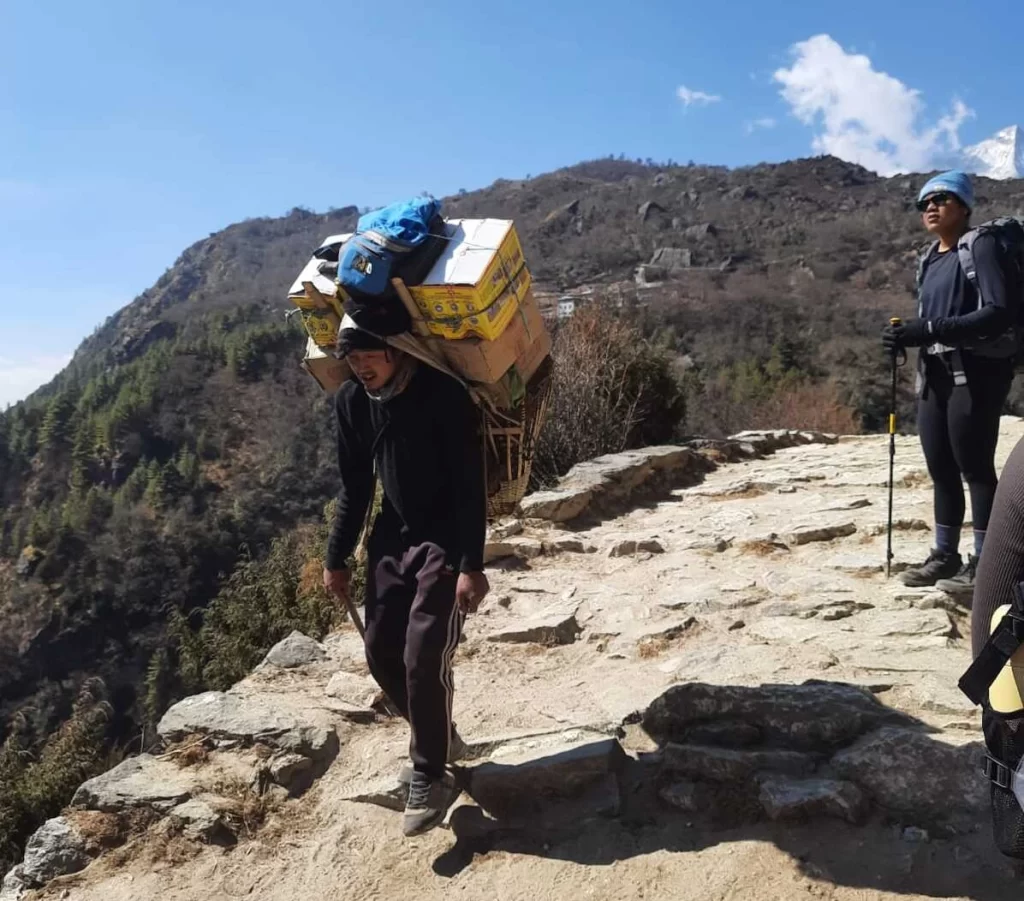
Guides and porters are the backbone of trekking in Nepal. While you are climbing toward Everest Base Camp or other trails, your guide and porter are carrying an enormous responsibility—both physically and mentally.
- Guides manage everything from route planning, permits, accommodations, safety, share deep insights into the mountains, culture, and trails, and even keep your spirits high when you feel exhausted.
- Porters, on the other hand, are the unsung heroes of the trek. They carry heavy loads, often up to 20–30 kg, along steep trails and at high altitudes where even walking with a small backpack feels tough.
Both roles are demanding. Despite the challenges, guides and porters often work with smiles, laughter, and unmatched hospitality. Tipping is not just money—it’s a heartfelt thank you for their dedication.
Another important reality: in remote Himalayan regions, food and essentials are extremely expensive. Porters usually pay for their own meals during the trek, meaning much of their salary goes directly into survival expenses. Tips, therefore, make a huge difference in supporting their livelihoods.
How Much Should You Tip on a Trek?
There’s no strict rule, but a widely accepted practice is around 10-15% of your total trekking package price.
For example:
- If your trek costs USD 1,360 (the average for a 14-day Everest Base Camp trek), you might consider tipping around USD 130–150 in total.
- Trekkers usually split this between guides and porters depending on the team size.
That said, tipping is personal. Some trekkers give around USD 100, while others may offer USD 500–1,000, especially if they’ve built a strong bond or received exceptional service. The amount should always reflect your satisfaction and appreciation.
👉 Tip according to your experience, the length of your trek, and your budget—but always aim for at least 10-15%.
Should You Tip Guides More or Porters More?
This is one of the most debated questions. Both roles are extremely important, but in different ways:
- Porters do the heavy lifting—literally. Without them, most trekkers would not be able to complete the journey. Their physical labor is intense, and they often carry loads that seem unimaginable at high altitude.
- Guides, however, are the backbone of your trek. They handle logistics, navigation, safety concerns, and your overall trekking experience. A good guide can make the difference between a stressful trek and a memorable one.
So, who deserves more? The answer is subjective. Some trekkers prefer to tip their porters a little more because of their physical effort, while others tip guides more because of their leadership and responsibilities.
A balanced approach is to tip both fairly, with perhaps a slightly higher share for the guide if you feel they played a bigger role in ensuring your comfort and safety.
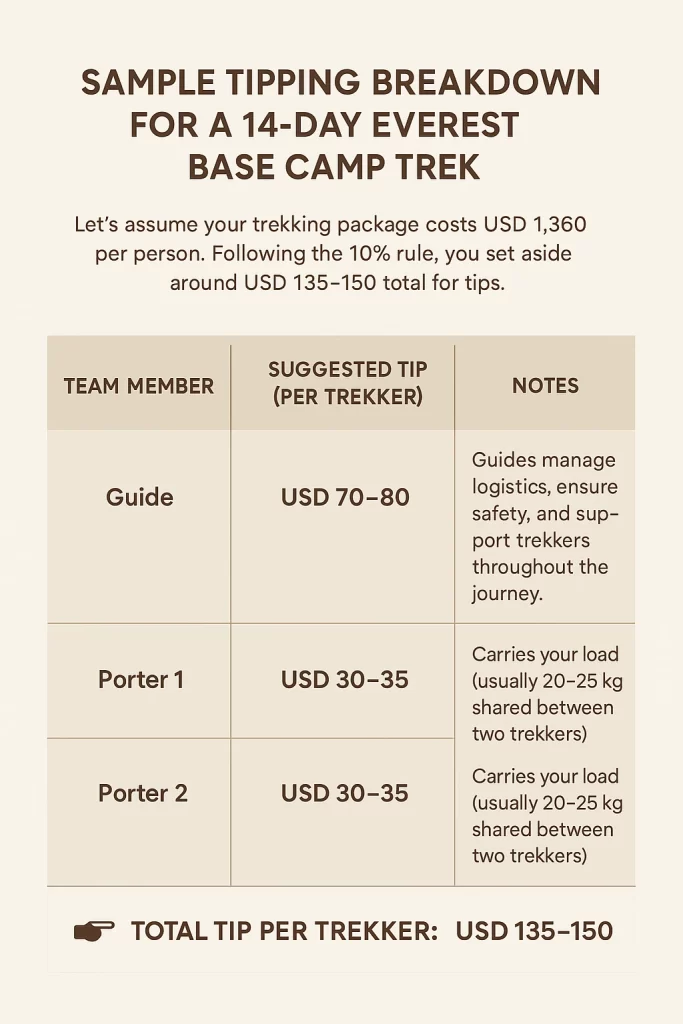
Sample Tipping Breakdown for a 14-Day Everest Base Camp Trek
Let’s assume your trekking package costs USD 1,360 per person. Following the 10-15% rule, you set aside around USD 135–150 total for tips.
Here’s how you might distribute it:
| Team Member | Suggested Tip (per trekker) | Notes |
| Guide | USD 70–80 | Guides manage logistics, ensure safety, and support trekkers throughout the journey. |
| Porter 1 | USD 30–35 | Carries your load (usually 20–25 kg shared between two trekkers). |
| Porter 2 | USD 30–35 | Same responsibility as above. |
👉 Total Tip (per trekker): USD 135–150
Example for Group Treks
If you’re trekking in a group of 4 people with:
- 1 guide + 2 porters
The group might pool tips together as follows: - Guide: USD 300 (total)
- Porter 1: USD 120–140 (total)
- Porter 2: USD 120–140 (total)
This way, everyone is tipped fairly, and the amount feels more generous when shared among group members
When and How to Tip?
Here are some practical tips for tipping in Nepal:
- At the End of the Trek – Tips are usually given at the end of the trek, during a farewell dinner or the final day.
- Use Cash – Cash in Nepalese Rupees or US Dollars is the most convenient. ATMs are available in Kathmandu and some bigger towns but not in remote areas.
- Give Directly or as a Group – If you are trekking in a group, pool your tips and hand them over together. This avoids confusion and makes distribution easier.
- Be Respectful – Present the tip with gratitude. A simple “thank you” goes a long way.
Key Things to Remember
- Adjust the total if your trek is longer or shorter than 14 days.
- For shorter treks (like Ghorepani Poon Hill), tips are naturally lower, but still aim for 10-15% of your package.
- Exceptional service? Feel free to go beyond the standard amount.
Conclusion
Tipping your guide and porter is not just about money—it’s about respect and appreciation. These hardworking men and women make it possible for thousands of trekkers every year to experience the beauty of the Himalayas.
So, while tipping is not mandatory in Nepal, it has become an essential part of the trekking culture. If you’re trekking to Everest Base Camp or anywhere else in Nepal, a 10–15% tip of your trek cost is a generous and fair way to thank your guide and porter for their dedication and hard work.
Your tip will not only brighten their day but also help support their families back home. And in return, you leave the Himalayas not just with memories of breathtaking peaks but also with the satisfaction of having shared kindness with the people who made your journey possible.
Frequently Asked Questions About Tipping in Nepal
1. Do I tip per day or only at the end of the trek?
Most trekkers tip at the end of the trek, not on a daily basis. This way, you can calculate a fair amount for the entire trip and give it in one go, usually during a farewell dinner or at the final stop.
2. Can I tip in my home currency?
Yes, US Dollars, Euros, and other major currencies are usually accepted. However, Nepalese Rupees are more convenient for guides and porters to use locally. If you bring foreign currency, make sure the bills are clean and in good condition (no tears or stains).
3. Should I give tips individually or as a group?
If you are trekking in a group, it’s best to pool your tips together and present them as one. This avoids confusion and ensures fair distribution. For solo trekkers, you can hand the tip directly to your guide and porter.
4. Do I have to tip if I’m not satisfied with the service?
Tipping is a way to show appreciation. If you are truly dissatisfied, you are not obligated to tip. That said, most guides and porters work extremely hard, and even a smaller tip can still reflect gratitude for their effort.
5. How much should I tip on shorter treks (like 5–7 days)?
For shorter treks, you can adjust the tipping amount accordingly. A good range is USD 40–80 total per trekker for trips under a week. Again, it depends on the service quality and your level of satisfaction.
6. Is tipping included in my trek package price?
No, tips are not included in most trekking packages. The package price usually covers permits, accommodation, food, transportation, and guide/porter salaries—but tips are an extra gesture from trekkers.
7. What if I have multiple porters?
If you have more than one porter, you can either divide your intended tip equally among them or hand the full amount to your guide and ask them to distribute it fairly.