
Annapurna Circuit Trek Difficulty: A Complete, Honest Guide for Every Trekker
If there is one trek in Nepal that has achieved legendary status, it’s the Annapurna Circuit Trek. For decades, trekkers from across the world have walked this extraordinary trail to experience its landscapes, Himalayan culture, and the feeling of crossing the iconic Thorong La Pass.
But there’s one question almost everyone wants to know before planning the adventure:
“How hard is the Annapurna Circuit Trek?”
In this detailed guide, we will break down everything you need to know about the Annapurna Circuit Trek Difficulty, how the terrain and altitude affect you, and what makes the trail both challenging and rewarding. Whether you’re a beginner considering your first Himalayan trek or an experienced hiker looking for a proper test of endurance, this article will help you understand the Annapurna Circuit difficulty level from a real, practical standpoint.
What Makes the Annapurna Circuit Trek Difficulty Unique?
The Annapurna Circuit is not just a long-distance trail — it’s a journey that takes you through dramatic climate zones, from warm river valleys to icy high-altitude pass crossings. Unlike short treks, this one tests your endurance over many days.
Here are the major factors that influence the Annapurna Circuit Trek Difficulty level:
1. High Altitude and the Thorong La Pass
The highest point of the trek, Thorong La Pass (5,416m), is a massive challenge.
Lack of oxygen at this height makes breathing difficult, walking slower, and fatigue stronger.
Altitude sickness is the number one reason people struggle, and it contributes significantly to the overall Annapurna trek difficulty.
2. Long Walking Days
Depending on your itinerary, you’ll walk 6–8 hours per day, sometimes more.
The trail includes steep ascents, rocky paths, and long stretches that demand steady stamina.
3. Drastic Weather Changes
One day you’re in a warm pine forest, the next morning you’re waking up in icy cold conditions at Thorong Phedi.
Unpredictable weather increases the Annapurna Circuit difficulty, especially in the winter and early spring.
4. Length of the Trek
The full circuit traditionally takes 14–18 days, though modern roads have shortened certain sections.
Still, even the shortened version can be physically demanding for many trekkers.
How Hard Is the Annapurna Circuit Trek? (Honest Breakdown)
Most trekkers describe the Annapurna Circuit Trek Difficulty level as moderate to challenging — not impossible, but definitely not an easy walk in the mountains.
Let’s break it down clearly:
✔ For Beginners
Yes, beginners can complete the trek, if they:
- Train well in advance
- Acclimatize properly
- Walk slowly and consistently
- Travel with a guide
For first-timers, the toughest day is definitely the ascent to Thorong La Pass.
✔ For Experienced Trekkers
If you have previous trekking experience above 3,500m, the circuit is very manageable.
However, the Thorong La Pass crossing still demands respect, no matter how fit you are.
✔ The Real Challenge
The true difficulty does not come from any single steep climb — it comes from the combination of altitude, cold temperatures, and long days of walking.
That’s the true story behind the Annapurna Circuit difficulty.
Stage-Wise Breakdown of Annapurna Circuit Trek Difficulty
To make things easier, let’s look at the trek section by section.
1. Besisahar to Chame – Easy to Moderate
- Walking Duration: 5–7 hours daily
- Altitude: 760m to 2,670m
- Difficulty Level: Low
These first few days are perfect for warming up. The trail gradually conditions your legs for the tougher days ahead.
2. Chame to Manang – Moderate
- Walking Duration: 5–6 hours
- Altitude: 2,670m to 3,540m
- Difficulty Level: Moderate
Manang is your acclimatization hub. The walk becomes steeper and the air thinner. Short hikes around Manang reduce the risk of altitude sickness.
3. Manang to Yak Kharka / Ledar – Moderate to Hard
- Walking Duration: 3–5 hours
- Altitude: 4,050m
- Difficulty Level: Moderate to Hard
Walking is short but intense. Every step feels heavier due to the altitude.
4. Yak Kharka to Thorong Phedi / High Camp – Hard
- Walking Duration: 4–5 hours
- Altitude climbs above 4,500m
- Difficulty Level: Hard
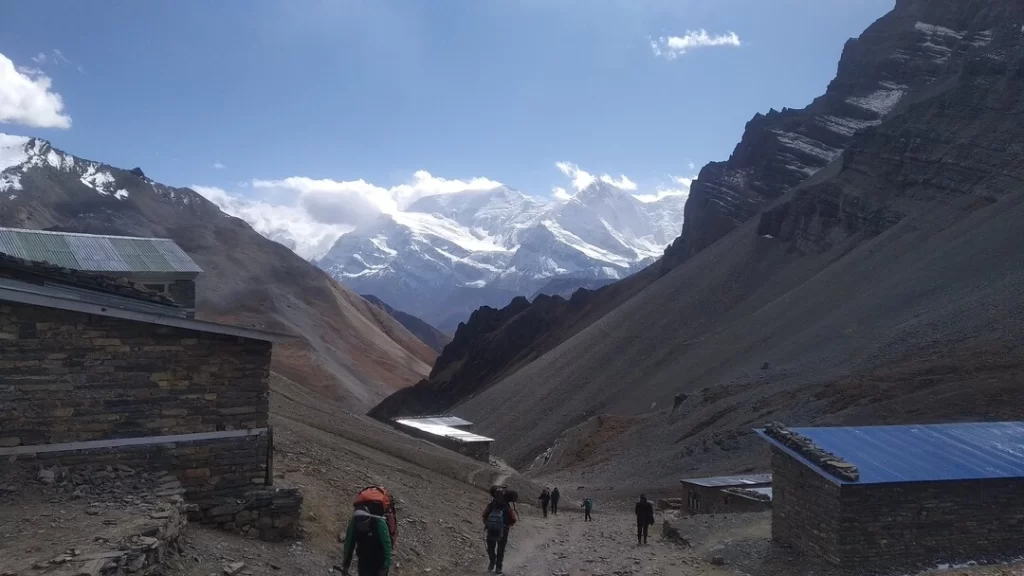
Thorong Phedi is cold, windy, and snowy during the late autumn/winter. Even breathing feels tiring.
5. Thorong Phedi to Thorong La Pass (5,416m) – Very Hard
This is the hardest day of the entire Annapurna Circuit.
- You start walking at 4–5 AM
- You climb 1,000m in high altitude
- The air feels painfully thin
- The pass crossing can take 7–10 hours
The difficulty on this day alone is what pushes the Annapurna Circuit Trek Difficulty into the challenging category.
6. Descent to Muktinath – Hard on the Knees
Steep downhill for hours can be harder than the climb for many trekkers.
Altitude Sickness and Annapurna Circuit Difficulty
AMS (Acute Mountain Sickness) is the biggest risk.
Symptoms include:
- Headache
- Nausea
- Loss of appetite
- Dizziness
- Shortness of breath
Acclimatization days in Manang are not optional — they are essential.
Taking the altitude lightly can turn this trek from “beautiful” to “dangerous” in one day.
Best Season to Reduce the Annapurna Circuit Trek Difficulty
Choosing the right season can dramatically lower your difficulty level.
Best Seasons
✔ Autumn (Sept–Nov)
✔ Spring (March–May)
These are the most stable months. Clear skies, mild temperatures, and safer trail conditions.
Avoid
✘ Monsoon (Jun–Aug) – landslides, leeches, slippery trails
✘ Winter (Dec–Feb) – heavy snow on Thorong La Pass
How to Prepare for the Annapurna Circuit Trek Difficulty?
1. Start Training 6–8 Weeks Before
Focus on:
- Stair climbing
- Hiking with a backpack
- Jogging
- Strength training
2. Mental Preparation Matters
The Annapurna Circuit is long. Your mindset plays a huge role in overcoming difficult days.
3. Hire a Guide
A guide will:
- Set a comfortable pace
- Watch your health
- Help you acclimatize
- Ensure safe passage over the Thorong La
This decision alone reduces your overall Annapurna Circuit difficulty by 40%.
4. Pack Smart
Do NOT overpack.
A lighter bag = much easier trekking.
5. Hydrate and Eat Well
Dehydration worsens altitude sickness.
Drink 3–4 liters of water daily.
Is the Annapurna Circuit Trek Difficulty Worth It? Absolutely.
Yes, it’s tough.
Yes, you’ll have moments where you question every life decision.
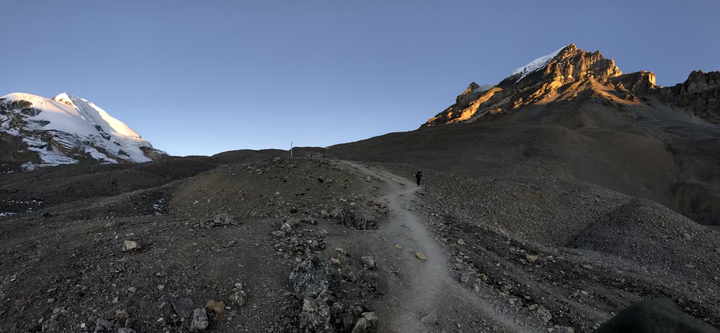
But the feeling of standing on Thorong La Pass, with the mountains towering around you, is one of the most rewarding experiences you’ll ever have.
The trail gives you:
- Himalayan peaks in every direction
- Ancient Buddhist monasteries
- High-altitude deserts
- Beautiful Gurung and Thakali villages
- The sense of completing one of the world’s greatest treks
When people ask if the Annapurna Circuit Trek Difficulty is worth it, the answer is always the same:
It will challenge you… and it will change you.
Final Thoughts
The Annapurna Circuit Trek Difficulty level should not discourage you.
It should inspire you — because great adventures are never meant to be easy.
With proper pacing, preparation, and guidance, thousands of trekkers of all ages complete this trail every year.
If you are planning to take on this challenge, know this:
You’re not just walking a trail — you’re experiencing one of the greatest journeys that the Himalayas have to offer.
Top FAQs for Annapurna Circuit Trek Difficulty
1. How difficult is the Annapurna Circuit Trek?
The Annapurna Circuit Trek Difficulty is considered moderate to challenging. The main challenge comes from long walking days, high altitude, and crossing Thorong La Pass at 5,416m. With proper acclimatization and pacing, most trekkers can complete it safely.
2. Can beginners do the Annapurna Circuit?
Yes, beginners can do the trek if they train well, follow a slow itinerary, and take acclimatization seriously. Hiring a guide significantly lowers the difficulty level and makes the trek safer.
3. What is the hardest part of the Annapurna Circuit?
The most challenging part is crossing Thorong La Pass, where altitude, cold temperatures, and steep climbing combine to make it the toughest day of the entire trek.
4. How long does it take to complete the Annapurna Circuit?
Most trekkers take 12–18 days, depending on their route and acclimatization schedule. Shorter road sections have made the overall duration more flexible, but the difficulty remains the same on the high-altitude sections.
5. What is the altitude of Thorong La Pass?
Thorong La Pass sits at 5,416 meters (17,769 ft). The high elevation is the main factor that increases the Annapurna Circuit Trek Difficulty.
6. Is altitude sickness common on the Annapurna Circuit?
Yes, altitude sickness is common, especially above Manang. Proper acclimatization days, staying hydrated, and ascending slowly can significantly reduce the risk.
7. What is the best season to minimize Annapurna Circuit difficulty?
Autumn (Sept–Nov) and Spring (March–May) are the best seasons. These months offer stable weather, clear views, and safer trail conditions, reducing overall difficulty.
8. Do I need to be very fit for the Annapurna Circuit?
You don’t need to be an athlete, but having good endurance is important. Training with hiking, stair climbing, and carrying a backpack for at least 6–8 weeks helps a lot.
9. Is the Annapurna Circuit harder than Everest Base Camp trek?
Physically, the Annapurna Circuit can feel harder because of the long duration and Thorong La Pass. However, EBC has consistently higher altitudes for many days. Both treks require proper acclimatization.
10. Can the Annapurna Circuit be done without a guide?
It’s possible, but not recommended. A guide improves safety, helps with altitude management, assists during emergencies, and greatly reduces the overall difficulty.