
The Khumbu Icefall: Everest Dangerzone
Introduction
The Khumbu Icefall is one of the most iconic and treacherous sections on the path to the summit of Mount Everest. For those attempting to scale the world’s highest peak via the southern (Nepal) route, the icefall is the first major technical challenge. Located just above Everest Base Camp, this constantly shifting field of towering ice towers and deep crevasses is as deadly as it is beautiful.
Every climbing season, hundreds of climbers must navigate this natural maze of unstable ice. Despite modern gear, experienced guides, and fixed ropes, the Khumbu Icefall remains unpredictable and unforgiving. It’s not just a physical hurdle — it’s a mental trial, a test of nerve, timing, and respect for nature’s brute force.
Known for its relentless danger, this glacier is both feared and revered in the mountaineering world. For many climbers, simply making it through the icefall and back safely is a victory in itself. Understanding its nature, history, and geography is crucial not only for those who climb it but also for those who admire Everest from afar.
Where is the Khumbu Icefall Located?
The Khumbu Icefall lies in the Solukhumbu District of northeastern Nepal, inside Sagarmatha National Park, a UNESCO World Heritage Site. It stretches between Everest Base Camp (5,364 meters/17,598 feet) and Camp I (around 6,000 meters/19,685 feet) on the south side of Mount Everest.
It is part of the Khumbu Glacier, the largest glacier in Nepal and one of the highest in the world. The icefall itself marks the point where the glacier spills over a steep cliff-like section of bedrock. The result is a 600-meter vertical drop of broken ice that tumbles and fractures under gravity.
The Khumbu Icefall can be clearly seen by trekkers visiting Everest Base Camp, and it is often audible from camp — moaning, cracking, and rumbling as giant ice blocks shift and collapse. It is a stark reminder that this is not just a beautiful region but a living, moving environment shaped by relentless geological forces.
How Was the Khumbu Icefall Formed?
The Khumbu Icefall was formed over millennia as glacial ice from the upper slopes of Mount Everest and surrounding peaks began moving downward under its own weight. As it flows into the steep section near Base Camp, the glacier encounters a rapid descent, creating immense pressure and forcing the ice to break apart.
This results in the formation of:
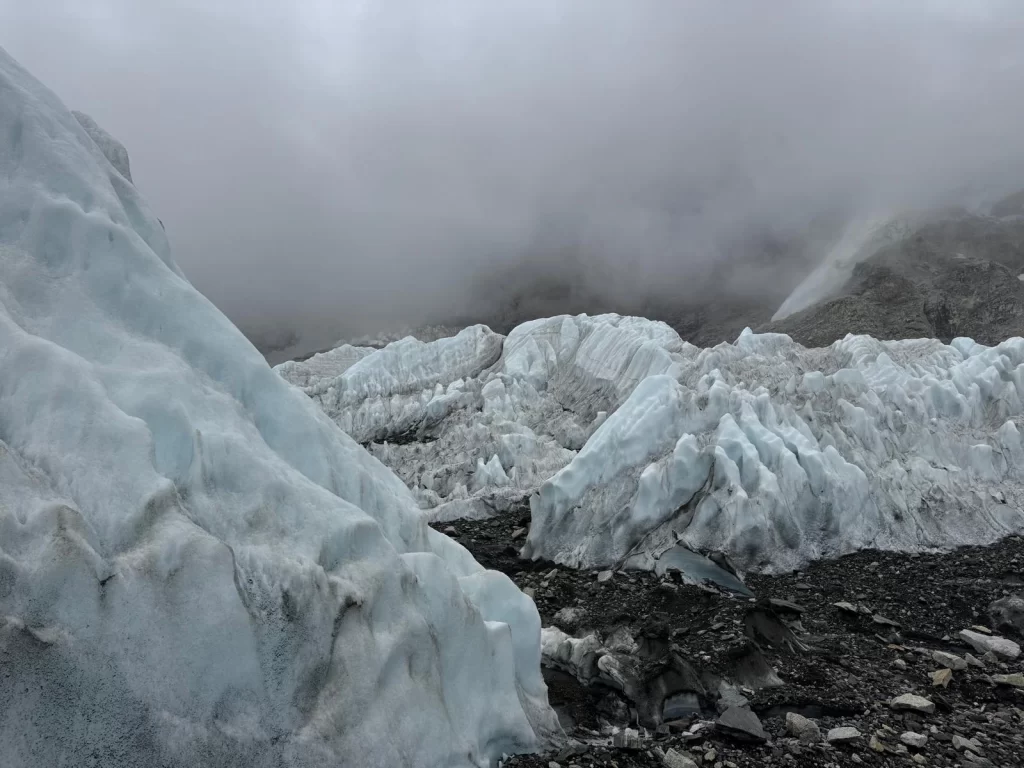
- Seracs: Huge columns of ice, some as tall as buildings, created by the fracturing of the glacier.
- Crevasses: Deep, open cracks in the ice that can be hidden beneath snow or stretch hundreds of feet deep.
- Ice Blocks and Debris: Shattered sections of ice that tumble and shift continuously.
Unlike more stable sections of glaciers, the icefall is in constant motion. Depending on the season and temperature, it can move up to 1 meter (3 feet) per day. Warmer temperatures during daylight cause more rapid movement, making early morning the only relatively safe window for passage.
The Khumbu Glacier itself originates in the Western Cwm, near the Lhotse Face and Everest’s summit slopes, and flows down toward the village of Lobuche. Over time, global warming and rising temperatures are accelerating glacial melt and causing increased instability in the icefall.
Key Features of the Khumbu Icefall
- Seracs
Towering ice blocks that can be several stories tall. They’re constantly in motion and can collapse without warning. - Crevasses
Deep cracks in the ice, often hidden by thin snow bridges, posing major risks to climbers. - Ladders & Ropes
The Icefall Doctors, a team of elite Sherpa climbers, set up aluminum ladders across crevasses and fix ropes each season to create a route for climbers. - Avalanche and Collapse Zones
The icefall is known for its unpredictable avalanches caused by falling seracs or snow build-up from above.
Why is the Khumbu Icefall So Dangerous?
The icefall’s ever-changing nature is its biggest threat. Here are the main dangers:
- Collapsing Seracs: Serac falls are sudden and often fatal.
- Crevasse Falls: Climbers can fall into deep chasms if they step on a weak snow bridge.
- Avalanches: The steep slopes above the icefall often release snow and ice.
- Glacial Movement: The icefall can move up to 1 meter (3 feet) per day.
- Temperature Sensitivity: Warmer temperatures during the day make the ice more unstable. This is why most teams cross the icefall before dawn, when the ice is most solid.
Climbing Through the Icefall: What’s It Like?
Climbing the Khumbu Icefall is an intense physical and mental test. Climbers must:
- Wear crampons for traction on ice.
- Use ascenders and carabiners on fixed ropes.
- Cross aluminum ladders spanning open crevasses — sometimes stacked two or three ladders deep.
- Stay alert every second, moving fast but carefully.
Even the most experienced climbers feel the tension — knowing that nature controls this terrain, not them.
The Role of the Icefall Doctors
The Icefall Doctors are a specialized group of Sherpa climbers tasked with maintaining the route through the Khumbu Icefall. They:
- Fix ladders and ropes.
- Monitor icefall conditions.
- Rebuild the route after collapses.
- Take on immense risk to keep others safe.
Without them, climbing Mount Everest via the south side would be near impossible.
Historical Tragedies in the Khumbu Icefall
The Khumbu Icefall has been the site of numerous fatalities and close calls. The unpredictable nature of this terrain has claimed the lives of many climbers and Sherpa guides. The risk is not always due to inexperience — even the most skilled and cautious mountaineers have fallen victim to its dangers.
2014 Icefall Tragedy – A National Mourning
On April 18, 2014, the Khumbu tragedy struck when a massive serac collapsed from the hanging glacier above the icefall, sending tons of ice crashing onto a group of Sherpa guides. They were fixing ropes and ladders in preparation for the commercial climbing season.
- 16 Sherpas died in the disaster.
- It remains one of the deadliest days in Everest history.
- The incident triggered intense global scrutiny over Sherpa safety, expedition practices, and compensation.
The tragedy ignited protests and strikes among the Sherpa community, demanding better insurance, improved working conditions, and recognition of the immense risks they take to support commercial expeditions.
Other Notable Incidents
- In 1970, six climbers died in the icefall, including members of a Japanese expedition.
- Over the decades, many climbers have fallen into crevasses, been buried under avalanches, or crushed by collapsing seracs.
- Some bodies have never been recovered due to the unstable and inaccessible terrain.
These tragedies underscore the harsh reality of Everest climbing — the mountain does not discriminate, and the icefall is often the first and most unpredictable test.
Can the Khumbu Icefall Be Avoided?
For those climbing Everest via the southeast ridge (Nepal side), the Khumbu Icefall is unavoidable. Some climbers attempt pre-acclimatization using helicopters to fly over it directly to Camp I or II, but these methods are controversial, costly, and restricted by weather and ethics.
Those seeking to avoid the Khumbu Icefall altogether usually consider climbing Everest via the North Col route from Tibet, which has its own unique challenges but lacks such a dangerous icefall.
Is the Khumbu Icefall Changing with Climate?
Yes. Climate change is impacting glacial structures across the Himalayas. With rising temperatures:
- The icefall is becoming less stable.
- Serac collapses are more frequent.
- Climbing windows are becoming shorter.
In coming decades, it’s possible that the Khumbu Icefall will become even more dangerous or impassable during certain seasons.
Fascination Despite the Fear
Despite its deadly reputation, the Khumbu Icefall holds a strange allure. For many climbers, it’s a rite of passage — a surreal, intimidating landscape that separates the brave from the bold.
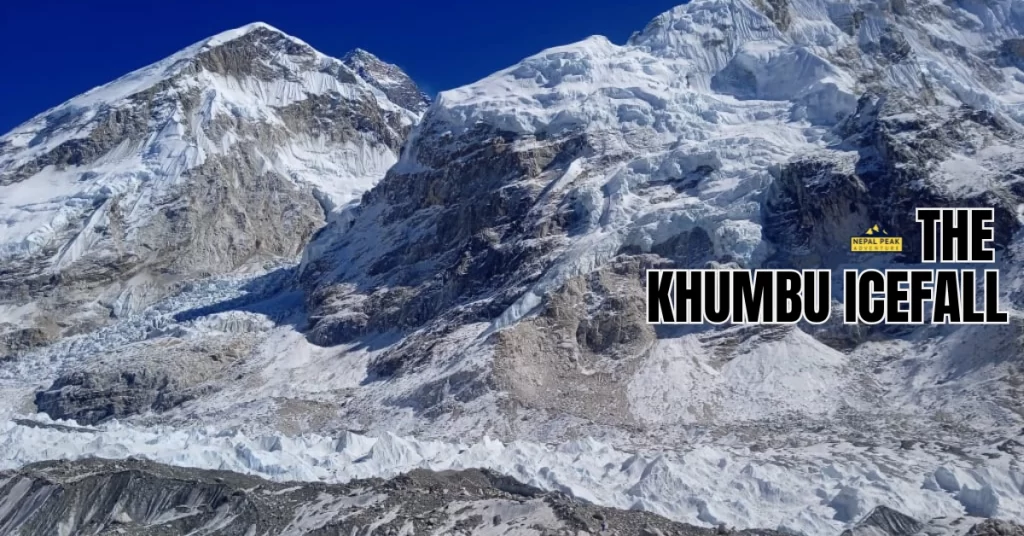
Its towering spires of ice, blue glacial walls, and deep crevasses offer a sight unlike anywhere else on Earth. It reminds climbers, tourists, and trekkers alike of the awesome, unpredictable power of the Himalayas.
Conclusion
The Khumbu Icefall is more than just an obstacle on the Everest route — it’s a symbol of nature’s raw, untamed force. For climbers, it demands humility, caution, and deep respect. It’s a place where human ambition meets natural danger, and every successful crossing is a tribute to skill, teamwork, and courage.
If you’re trekking to Everest Base Camp, you may glimpse this icy maze from a safe distance. And if you’re aiming for the summit — the Khumbu Icefall will be your first and perhaps most unforgettable test.