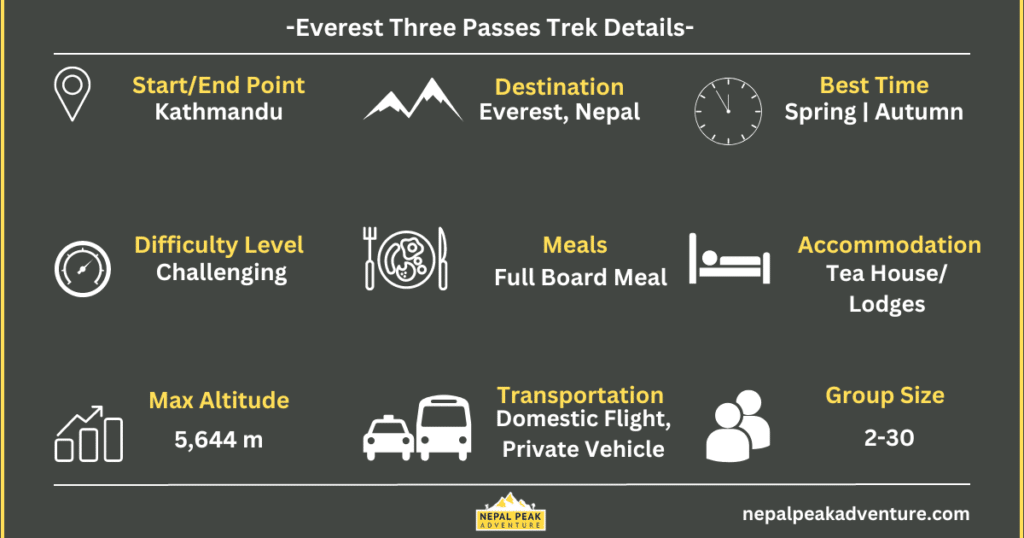
Three High Passes Trek Route Overview
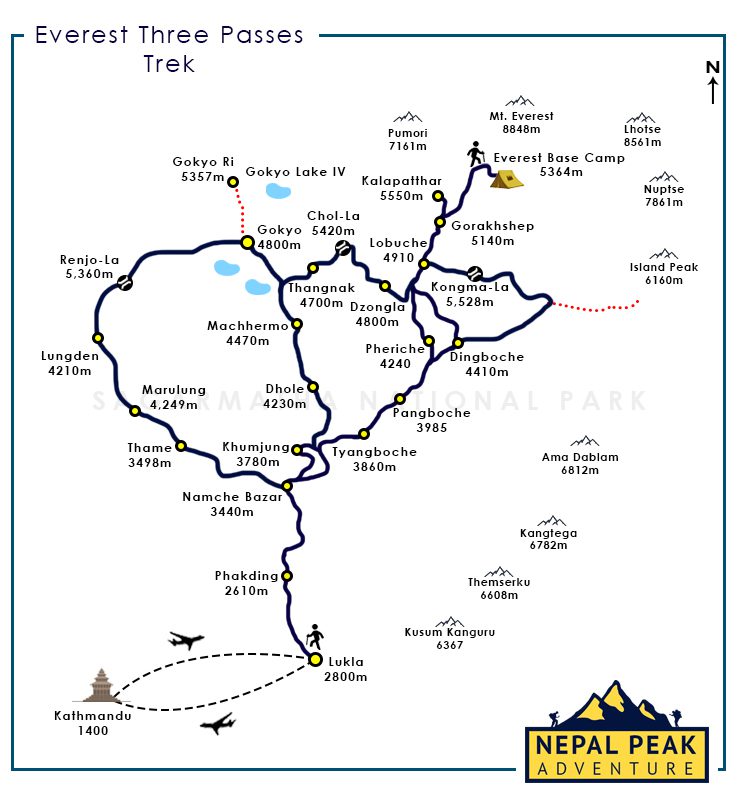
The Everest Three Passes Trek journey begins with a scenic mountain flight from Kathmandu or Ramechhap (more details about the Lukla Flight) to Lukla. The trek then officially kicks off with a picturesque trail leading to Phakding at 2610 meters before ascending to the vibrant mountain town of Namche Bazaar, strategically positioned at 3440 meters where we will have one extra day for acclimatization.
Continuing the ascent forward, the journey unfolds to Tengboche, known for its charming monastery and stunning panoramic views. Dingboche, a high-altitude village, is the next destination where will stay another extra day for the acclimatization. The following day our trail leads you to the Chhukung at 4730 meters. Here, trekkers undertake the exhilarating climb of Chhukung Ri at 5546 meters, offering breathtaking vistas.
The trek’s pinnacle arrives as adventurers cross the challenging Kongma La Pass at 5528 meters one of the passes among the three passes, followed by a descent down to Lobuche at 4940 meters. The journey then leads to the legendary Everest Base Camp at 5364 meters via Gorakshep (5164 meters), with a return to Gorakshep for an overnight stay. The subsequent day includes a hike to the iconic Kala Patthar at 5644 meters, revealing unparalleled views of Mount Everest, before descending to Lobuche again. The three-pass trail then progresses to Dzongla at 4830 meters, a serene location surrounded by the grandeur of the Himalayas.
The trek takes a daring turn as trekkers traverse the challenging Cho La Pass at 5420 meters (second pass), en route to the picturesque Gokyo situated by the tranquil Gokyo Lakes at 4800 meters. A day of exploration follows, including a hike to Gokyo-Ri at 5357 meters and a rest day in Gokyo at 4750 meters. The journey continues with a trek to Marlung at 4249 meters via the scenic Renjo La Pass at 5360 meters (third and final pass). The trail eventually leads back to Namche Bazaar at 3440 meters, offering a chance to reflect on the varied landscapes encountered.
The final leg of the trek involves a return to Lukla at 2860 meters, completing the epic Everest Three Passes adventure. This anticlockwise route not only navigates through the challenging high passes but also allows trekkers to witness the iconic Everest Base Camp, charming Sherpa villages, and serene alpine landscapes.
The itinerary, though presented in an anticlockwise direction, offers the flexibility for trekkers to undertake the journey in reverse, ensuring a dynamic and awe-inspiring experience in the heart of the Himalayas.
Everest Three Passes Trek Itinerary
Our 19-day Everest Three Passes trek takes you on an anticlockwise journey, challenging your spirit as you conquer Kongma La Pass, Cho La, and Renjo La Pass in succession. The trek spans 16 days within the mountain region, ensuring a comprehensive exploration of the Everest terrain. To facilitate acclimatization, our itinerary strategically incorporates three extra overnight stops at key locations: Namche Bazaar, Dingboche, and Gokyo.
This thoughtfully designed itinerary doesn’t just focus on the three high passes but also ensures you experience the iconic Everest Base Camp, the mesmerizing Kalapatthar, and other major attractions such as Gokyo Ri and Chukkung Ri. Each day unfolds with a new adventure, providing a balance of challenge and awe-inspiring landscapes.
Recognizing that individual preferences and schedules vary, we offer different variations of the Everest Three Passes trek itinerary. Our flexibility extends to customization, allowing you to tailor the journey to align with your specific preferences and time constraints. Whether you prefer the anticlockwise route or wish to explore the passes in a clockwise direction, we are here to accommodate your choices.
Feel free to inquire for more details about the trek itinerary, and let us assist you in planning an Everest base camp passes trek adventure that suits your unique preferences and schedule. Your journey awaits, and we’re here to make it an unforgettable experience tailored just for you.
Things You Should Know
Your typical day on the trek
Your adventure officially commences with your arrival in Lukla, marking the beginning of an exciting journey through the Everest region.
Each day on the trail unfolds with a hearty breakfast served between 6:30 to 7:30 AM, setting the tone for the day’s trekking endeavors. After breakfast, you embark on your trek, setting out towards the day’s scheduled destinations. Before commencing the trek, we advise you to pack all essentials for the day in your backpack, while your duffel bags are expertly carried by the porter at their own comfortable pace.
As you traverse the stunning landscapes, the journey incorporates regular stops for short breaks, allowing you to hydrate, refuel with snacks, and capture the breathtaking scenery through your lens. Typically, after three to four hours of trekking, a well-deserved lunch break is scheduled en route, providing a moment to rest and recharge.
Upon reaching the designated overnight stop, you have the opportunity to unwind and explore the surrounding area. In the evening, a nourishing dinner is served around 6 to 7 PM, creating a communal atmosphere among fellow trekkers. Post-dinner, engage in enlightening conversations with your trekking guide, who will also provide a detailed briefing about the plan for the following day. Subsequently, you can choose to retire to bed for a restful night’s sleep or spend your time playing cards, delving into a good book, or simply relishing moments of relaxation at your own pace.
This carefully structured daily routine ensures not only a smooth trekking experience but also offers ample opportunities to immerse yourself in the natural beauty and cultural richness of the Everest region.
Can I do the Everest Three Passes Trek?
The Everest Three Passes trek beckons to all adventure enthusiasts seeking a thrilling experience. While navigating the three highest passes of the Everest region poses a formidable challenge, with adequate preparation, physical fitness, and expert guidance, this trek is accessible to anyone with a passion for exploration. It is advisable, however, to have prior trekking experience at higher altitudes to enhance readiness for the demands of this epic journey.
This trek unfolds as a journey of wonders, weaving through the limitless beauty of the Himalayas, adorned with panoramic landscapes, and steeped in rich cultural traditions. The trail offers a tapestry of experiences, showcasing the diverse tapestry of the region.
Undoubtedly, the Everest Three Passes trek presents its own set of challenges, requiring trekkers to navigate rugged trails, traverse glaciers, and conquer challenging uphill sections. Despite the difficulties, the rewards are immeasurable, with each step revealing breathtaking vistas and a deep immersion into the heart of the Himalayan landscape.
For those who may be novices or prefer a more gradual introduction to the region, we recommend the classic 14-day Everest Base Camp Trek. This alternative allows trekkers to witness the grandeur of the Everest region without tackling the high passes immediately, providing a stepping stone for those aspiring to undertake the more challenging Three Passes adventure in the future.
About Lukla Flight
We would like to bring to your attention to some of the significant updates regarding Lukla flights, particularly during the peak trek seasons (March, April, May, October, and November). Civil Aviation Authority of Nepal declared that there will be no direct flights during peak seasons due to heightened air traffic in these months, Lukla flights will now operate from Manthali Airport in Ramechhap rather than Kathmandu.
Conversely, in the non-peak seasons (January, February, June, July, August, September, and December), Lukla flights will continue to depart from Kathmandu.
For those boarding a Lukla flight from Ramechhap, please be advised that an early departure from Kathmandu is necessary, typically around 12:30 to 1:00 AM. The journey from Kathmandu to Ramechhap typically takes 4-5 hours. Your guide will be at your hotel at the specified time to pick you up and drive you to Ramechhap.
It’s crucial to acknowledge that Lukla flights may face disruptions due to various factors, such as adverse weather conditions, airline technical issues, and unforeseen circumstances. Consequently, we highly recommend planning for an additional 2-3 days as a contingency to accommodate any potential delays.
We deeply appreciate your understanding and cooperation in adapting to these adjustments, ensuring a smoother and more enjoyable trekking experience.
For further details, you can refer to Lukla Flight.
Useful Info
Accommodations
Our comprehensive package ensures that accommodation facilities are seamlessly included. In Kathmandu, you will enjoy a two-night stay in a star-category hotel. This accommodation follows a bed and breakfast plan with twin sharing, providing a comfortable and relaxing start to your journey.
During the trek, your accommodations will be in teahouses and lodges, carefully selected to meet your needs for a restful night’s sleep. These lodgings offer warm blankets, pillows, and comfortable mattresses. Typically, rooms are designed for twin sharing, featuring two single beds. For those seeking more privacy, the option for a single room is available at an additional cost, although this may not be applicable during peak seasons.
While teahouses have undergone upgrades and offer quality rooms, it’s important to note that as you ascend in elevation, only common standard rooms will be available. Our plan includes five nights with attached bathrooms and hot shower facilities (1 night in Phakding, 3 nights in Namche, and 1 night in Lukla). The remaining 11 nights will be spent in basic tea houses and lodges, as these locations primarily provide basic room amenities.
Throughout the entire journey, we prioritize securing the best possible tea houses with spectacular mountain and scenery views. Your accommodation experience is an integral part of the overall trekking adventure, and we are committed to ensuring your comfort and enjoyment at every step of the way.
Meals and Drinks during the 3 passes trek
Our Everest Three Passes trek package is designed to provide you with a hassle-free dining experience throughout the entire journey. All meals, including breakfast, lunch, and dinner, are included during the trek itself. However, it’s important to note that in Kathmandu, lunch and dinner are not included as part of the package.
While on the trek, you will enjoy breakfast and dinner at the same teahouses where you stay, creating a convenient and comfortable dining routine. Lunch will be provided at designated lunch stops along the day hike, allowing you to refuel and take in the breathtaking surroundings. The teahouses and lodges along the route offer a diverse menu, featuring a wide array of Western and Indian cuisines, along with delicious local Nepali dishes. We highly recommend trying the traditional Nepali dish, Dal Bhaat, for a truly authentic experience.
Considering health concerns, especially in high-altitude environments, it is advisable to avoid non-vegetarian items, as the freshness of meat and dairy products may be a challenge in mountain regions.
For beverages, aside from the tea and coffee served with every meal, the cost of other drinks is not included in the package. You have the flexibility to purchase bottled water, hot water, and other beverage items at an additional cost, typically ranging from USD 2 to USD 5.
Our goal is to ensure that you have a satisfying and enjoyable culinary experience throughout the Everest Three Passes trek, offering a balance of convenience and flexibility in your dining choices.
Drinking Water on the 3 passes trek
Tap water is typically available in teahouses and along the trekking route during the Everest Three Passes journey. While it can be convenient, it is essential to exercise caution. Refrain from consuming tap water directly, as it may upset your stomach. Instead, consider filling up your water bottles and using purifying tablets or sterilizing methods to ensure their safety before use.
Alternatively, if you prefer the convenience of pre-packaged water, bottled water is readily available along the trek. The cost for a bottle typically ranges from USD 2 to USD 5, offering a reliable and safe option for hydration.
For those in need of hot water, teahouses provide this service at an additional cost. Hot water is available in small, medium, and large pots, each varying in price. This option allows trekkers to enjoy warm beverages on the cold temperature.
Transportation Facilities
For a seamless and comfortable journey throughout your time in Nepal, Nepal Peak Adventure takes care of all your transportation needs. From the moment you arrive in Nepal to your final departure, all transfers are meticulously arranged, ensuring a hassle-free experience all via private vehicles.
Additionally, to streamline your trekking experience, we take care of all arrangements for your Lukla flight. The flight will be pre-booked by us, allowing you to board with ease and embark on your trek with a sense of tranquility.
Best time for the Everest Three Passes Trek
The best time for the Everest Three Passes Trek is during the pre-monsoon (spring) and post-monsoon (autumn) seasons. Here are the optimal periods:
Spring (Pre-Monsoon): March to May
Pros: Mild temperatures, blooming rhododendrons, and clear skies.
Cons: Crowded trails during peak season.
Autumn (Post-Monsoon): September to November
Pros: Stable weather, clear visibility, and comfortable temperatures.
Cons: Popular trekking season, leading to crowded trails.
Both spring and autumn offer favorable weather conditions, allowing for spectacular views of the Himalayan landscape. Trekkers can expect daytime temperatures ranging from 10°C to 20°C (50°F to 68°F) during these seasons.
It’s crucial to note that while these are the peak seasons for the Everest Three Passes Trek, some trekkers also venture out during the winter and monsoon seasons. However, winter brings colder temperatures, increased snow cover, and potential trail closures, while the monsoon season (June to August) brings heavy rainfall, making trekking challenging.
Everest Three High Passes Trek Difficulty
The Everest Three High Passes Trek is known for its challenging nature and is typically recommended for seasoned trekkers with a high level of physical fitness. The trek involves conquering three of the highest and most demanding mountain passes in the Everest region: Kongma La Pass, Cho La Pass, and Renjo La Pass. These passes reach elevations exceeding 5,300 meters (17,500 feet), exposing trekkers to the challenges of high altitude, including acclimatization concerns.
The route encompasses technical sections with steep ascents, descents, rocky terrain, and potential icy or snowy conditions, especially at the passes. The trek’s duration spans approximately 16 to 19 days, demanding endurance and stamina. And every day you have to walk for around 4-6 hours.
Unpredictable weather conditions, including cold temperatures and high winds, add to the difficulty. The trail traverses remote and rugged landscapes, featuring challenging paths, river crossings, and varied terrain. Accommodation in teahouses along the route may offer basic facilities, and amenities become more limited at higher altitudes.
Despite these challenges, the trek rewards adventurers with breathtaking scenery, panoramic views of Everest, and a unique, demanding experience. Proper physical conditioning, acclimatization, and careful preparation are crucial for a safe and enjoyable journey.
Everest Three Passes Trek Safety and Acclimatization
Your safety and comfort are our utmost priorities at Nepal Peak Adventure. Our team of dedicated and professional guides and porters is committed to ensuring your well-being throughout the entire trip, allowing you to focus solely on enjoying the journey. They handle all aspects of accommodation and meals, providing you with a seamless and worry-free experience.
Our experienced guides are equipped with first aid kits at all times, and they diligently monitor your oxygen levels daily to ensure your fitness and well-being at higher elevations. In the event of any difficulties, our guides are trained to analyze the situation and take necessary actions promptly.
As part of our Everest Three Passes trek package, we have strategically included extra days at various locations to facilitate the acclimatization process. This is a crucial aspect of the trek, ensuring that your body adjusts gradually to the higher elevations, reducing the risk of altitude-related issues.
Moreover, our official team is well-prepared for emergencies and evacuations. If the need arises, we have a robust plan in place to safely evacuate you from the mountains and provide the necessary assistance. Your safety is our paramount concern, and our comprehensive measures are designed to make your trek not only adventurous but also secure and enjoyable.
Do you need a guide for the three passes trek?
While it is not mandatory, hiring a guide for the Everest Three Passes Trek is highly recommended for several reasons. The trek involves navigating challenging terrains, high altitudes, and technical sections, and having an experienced guide can enhance both safety and enjoyment.
They can also assist in acclimatization and monitor your well-being, reducing the risk of altitude-related issues. In case of emergencies, a guide is trained to handle situations promptly, including coordinating evacuations if necessary.
Travel Insurance
Travel insurance is essential for anyone going on the Everest Three Passes Trek. Your insurance should include provisions for emergency medical situations, covering aspects such as altitude sickness and the associated need for immediate medical evacuation and treatment.
Additionally, ensure that your policy caters to trip cancellations or interruptions, offering reimbursement for pre-paid expenses. Given the mountainous terrain, having coverage for helicopter evacuations and rescues is imperative. Protection for baggage and personal belongings, as well as provisions for potential travel delays, should also be integral to your insurance plan.
Confirm that your policy extends to adventure activities like trekking at high altitudes, and carefully review its terms and conditions, including coverage limits and exclusions. Acquiring the right travel insurance (world nomads) is a crucial step in ensuring a secure and worry-free experience throughout the Everest Three Passes Trek.