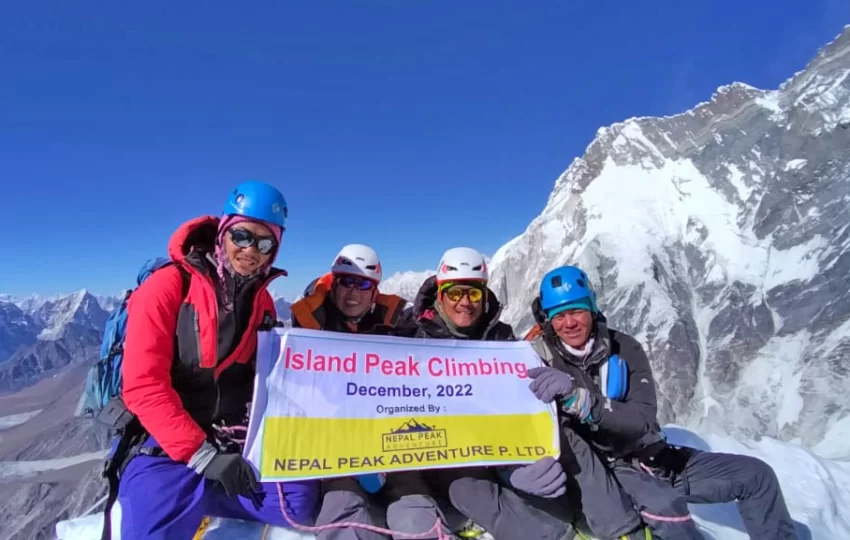
Nepal Peak Adventure (NPA) presents a robust 20-day Island Peak Climbing expedition for the 2025/2026 season, meticulously designed to offer a challenging yet accessible high-altitude mountaineering experience.
This package integrates the renowned Everest Base Camp (EBC) trek, providing a structured approach to acclimatization and a rich immersion into the Himalayan landscape and Sherpa culture. The expedition culminates in the ascent of Island Peak, also known as Imja Tse (6,189m / 20,305ft), a peak celebrated for its panoramic views of the world's highest summits.
Island Peak Climbing Package Overview (Summary)
| Feature | Detail |
| Package Name | Island Peak Climbing with classic EBC Trek |
| Duration | 20 Days (16 trekking/climbing days, 4 Kathmandu days) |
| Starting Cost | $2640 |
| Max Altitude | 6,189m (Island Peak Summit) |
| Difficulty Grade | 2B (Challenging for first-time trekkers, not highly technical) |
| Best Seasons | Autumn (Sept-Nov) & Spring (Mar-May) |
| Accommodation Type | 3-star hotel in Kathmandu, Teahouses/Lodges & Tents on trek |
| Meals Included | All meals on trek/climb, Welcome/Farewell dinners, Kathmandu breakfasts |
| Transportation | Flights (Kathmandu/Ramechhap-Lukla), Private vehicle transfers |
Island Peak Overview:
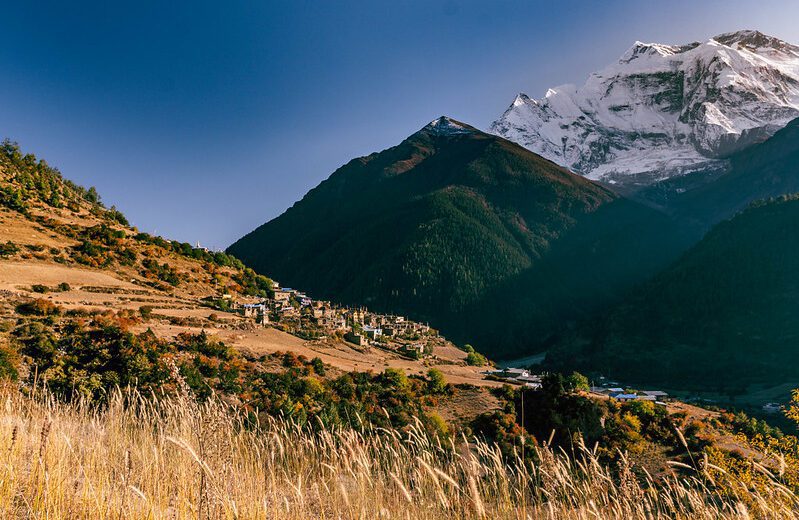
Island Peak (Imja Tse, 6,189m / 20,305ft) stands as a prominent trekking peak within Nepal's Everest region, captivating adventurers with its breathtaking vistas of Mount Everest, Lhotse, Makalu, and Ama Dablam. Its allure stems from offering a challenging yet attainable mountaineering experience, making it an excellent entry point into high-altitude climbing for individuals with moderate to advanced physical conditioning, without necessitating extensive technical climbing expertise
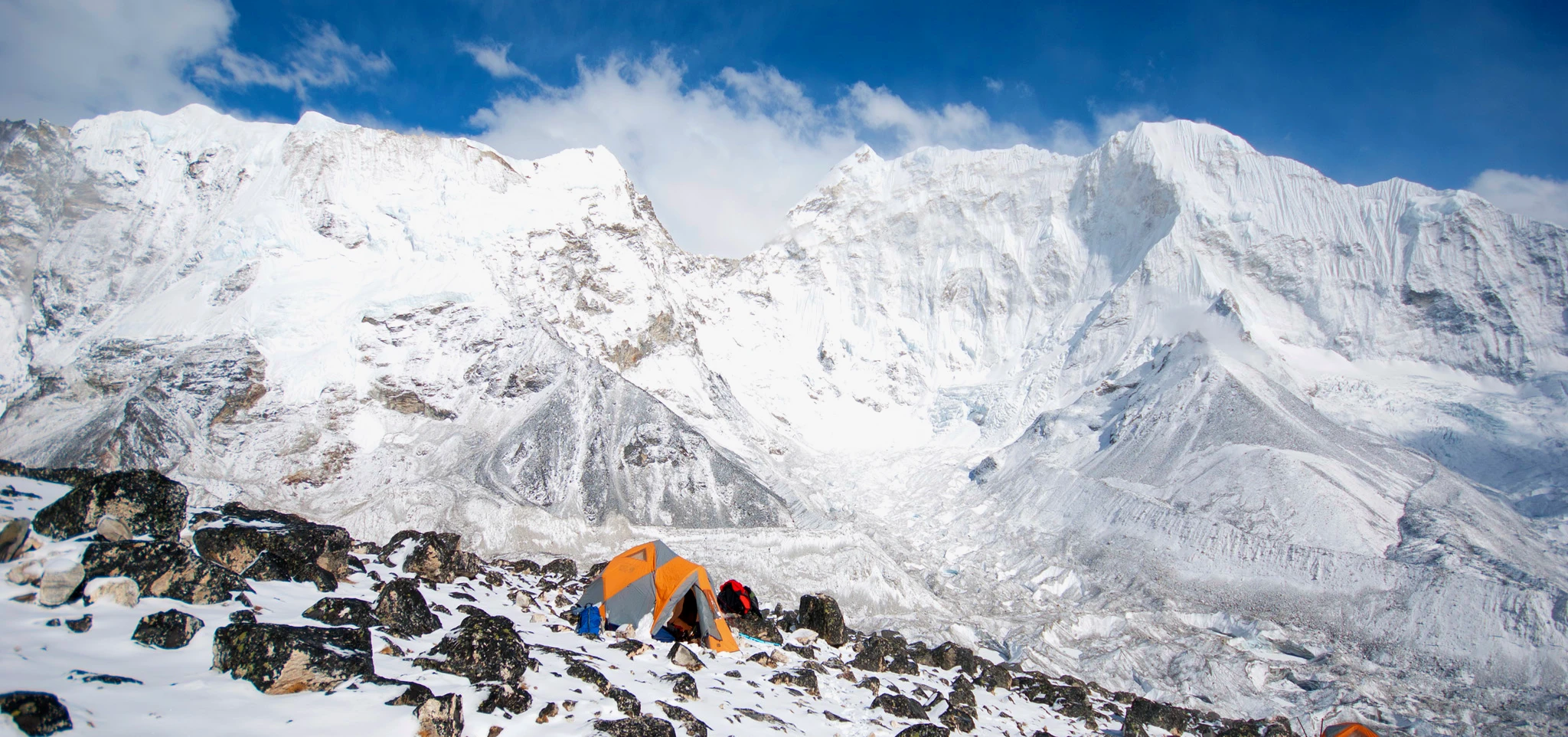
"By Joining with Nepal Peak Adventure on this remarkable 20-day Island Peak Climbing expedition, you will surely reach atop the majestic Island Peak. Surrounded by the breathtaking Himalayan panorama & expert guides, you savor both achievement and safety adventure in Nepal. Nepal Peak Adventure is committed to making your Island Peak Climbing expedition a safe, thrilling, and unforgettable adventure of a lifetime.
Expeditions to Island Peak are typically combined with the classic Everest Base Camp trek, a strategic integration that facilitates essential acclimatization and provides a profound cultural journey through the vibrant Sherpa villages of the Khumbu Valley.
The mountain is described as having some harder sections, despite being considered less technical than higher mountaineering objectives. It is often characterized as challenging for individuals new to high-altitude trekking but not inherently a highly technical climb. This positioning suggests that Island Peak appeals to a broad spectrum of adventure travelers.
However, it is crucial to recognize the inherent risks associated with high-altitude climbing. Reports indicate fatalities on Island Peak linked to insufficient physical preparation, inadequate acclimatization, and poor technical proficiency. Despite its classification as a "trekking peak" by some, it is unequivocally a mountaineering endeavor that demands respect and thorough preparation.
The detailed preparation and safety sections provided by NPA are vital in mitigating these risks by establishing realistic expectations and underscoring the necessity of diligent training and adherence to safety protocols.
Cost Inclusion and Exclusion in Island Peak:
The Nepal Peak Adventure Island Peak Climbing 2025/26 package is structured as a comprehensive 20-day expedition. Of this total, 16 days are dedicated to the active trekking and climbing phases, with the remaining days allocated to activities in Kathmandu.
This extended duration is intentionally designed to incorporate ample time for acclimatization and to allow participants to fully experience the Everest Base Camp trek. The package commences from a starting cost of $2640. This expedition offers a distinctive opportunity to ascend a 6,189m peak, seamlessly connected to the iconic Everest Base Camp route.
Also, having a clear cost breakdown of Island Peak Climbing helps in budgeting for the adventure. So, here are the cost inclusion & exclusion in the package:
Cost Inclusion:
- Upon Arrival at the airport, a Private Vehicle pick-up service to the booked hotel.
- Welcome dinner at an authentic Nepali restaurant with a Nepali Cultural program.
- Two nights of accommodation in a 3-star hotel in Kathmandu on the basis of Bed & breakfast service (based on twin sharing).
- Flight fare from Kathmandu to Lukla and Return-back flight fare (during off-season), including airport tax and domestic transfers.
- Flight fare from Ramechhap to Lukla and Return-back flight fare (during peak season).
- Private vehicle for Domestic Airpot transfer for Lukla flight.
- Accommodation in teahouses/mountain lodges and tents during climbing and trekking.
- Five days of attached bathroom accommodation with hot showers (one night in Phakding, three nights in Namche, and one night in Lukla during the trek)
- All cooked & warm meals during the Peak Climbing or Camping
- All meals during the trekking route in the lodge/tea house (breakfast, lunch, and dinner)
- Expenses for climbing crews (salary, insurance, and expenses)
- Professional guide: Government-certified, experienced, fluent in English, trained in first aid and eco-friendly practices
- Assistant guides: Provided according to the group size to offer the necessary support
- Porters: Provided as needed to carry your belongings
- All necessary climbing permits and fees for Sagarmatha National Park
- All applicable government and local body taxes
- Down jacket and sleeping bags available upon request
- Duffle bag (for expedition purposes only) and a souvenir T-shirt
- Island Peak Climbing map
- Certificate of completion for the expedition
- Group medical kit box carried by the guide
- Unlimited hydration tablets
- Arrangement of emergency helicopter evacuation service will be covered by your travel insurance company
- Farewell dinner at a reputable restaurant
- Private vehicle transfer for final departure.
Cost Exclusion:
- Nepal Visa fee
- International round-trip flight to Kathmandu
- Meals in Kathmandu, excluding welcome dinner, farewell dinner, and breakfast
- The cost of beverages, mineral water, beer, and other drinks not mentioned in the inclusion list during the trek
- Travel insurance, including coverage for helicopter evacuation
- Tipping for the guide, porter, and climbing crew
- Personal climbing equipment expenses
- Expenses for items not included in the inclusion list will be borne by you.
Island Peak Climbing Itinerary Overview
- Day 01: Arrival in Kathmandu ( Altitude = 1400m)
- Day 02: Kathmandu sightseeing and trip preparation
- Day 03: Kathmandu-Lukla flight and trek to Phakding (Altitude = 2610m) (Trekking Hour = 3/4 hour)
- Day 04: Trek to Namche Bazar (Altitude = 3440m) (Trekking Hour = 5/6 hour)
- Day 05: Namche Bazaar- Acclimatization Day
- Day 06: Trek to Tengboche (Altitude = 3867m) - (Trekking Hour = 4/5 hour)
- Day 07: Trek to Dingboche (Altitude = 4410m) - (Trekking Hour = 5/6 hour)
- Day 08: Acclimatization day at Dingboche
- Day 09: Trek to Lobuche (Altitude = 4940m) - (Trekking Hour = 5/6 hour)
- Day 10: Trek to The Everest Base Camp (Altitude = 5364m) via Gorakshep (Altitude = 5164m) and return to Gorakshep overnight. – (Trekking hour = 5/6 hour)
- Day 11: Hike to Kalapatthar (5643m) and trek to Lobuche (Altitude = 4940) (Trekking Hour = 4/5 hour)
- Day 12: Trek to Chhukung (4730m/1) via Kongma La (Altitude = 5528) (Trekking Hour = 7/8 hour)
- Day 13: Trek to Island Peak Base Camp (Altitude = 5087m) – (Trekking Hour = 3/4 hour)
- Day 14: Pre-summit training at Island Peak base camp
- Day 15: Island peak Summit (6189m) and descend to the Base Camp
- Day 16: Trek to Pangboche (Altitude = 3985m) (Trekking Hour = 5/6 hour)
- Day 17: Trek to Namche Bazar (Altitude = 3440m) (Trekking Hour = 6/7 hour)
- Day 18: Trek to Lukla (Altitude = 2652m) – (Trekking Hour=7/8 hour)
- Day 19: Fly to Kathmandu (1400m) – 25 minutes flight
- Day 20: Final Departure
The itinerary incorporates two crucial dedicated acclimatization days: Day 5 at Namche Bazaar (3440m) and Day 8 at Dingboche (4410m). The importance of acclimatization for safety and successful high-altitude endeavors cannot be overstated, with a lack of adequate acclimatization being a significant contributing factor to adverse outcomes.
The itinerary also includes a pre-summit training day at Island Peak Base Camp on Day 14. This structured approach to gradual ascent and dedicated acclimatization directly addresses a major risk factor in high-altitude climbing.
A notable feature of Day 12 is the trek to Chhukung via Kongma La (5528m), a demanding 7-8 hour segment. Kongma La is one of the three high passes in the Everest region, renowned for its challenging terrain and spectacular views. Its inclusion adds a significant physical challenge and enhances the scenic rewards of the expedition beyond the standard Everest Base Camp trek.
While this feature undoubtedly amplifies the adventure and scenic value, it also increases the overall difficulty and physical demands of the trek.
Island Peak Climbing Itinerary Summarization:
The trip starts with an exciting flight to Lukla airport from Kathmandu, the capital city of Nepal, and ends at Kathmandu. We have efficiently developed this itinerary so that you will fully acclimatize yourself before climbing Island Peak.
The first part of the Island Peak route follows the classic Everest Base Camp trail. Before you reach your expected island peak, you will visit Everest base camp and ascend to the summit of Kalapathar.
From Lukla, we trek to Phakding and then to the capital of Khumbu, Namche Bazaar. We will stop one more night at Namche for acclimatization. Our trek further progress to the Dingboche passing through the beautiful Tyangboche and Pangboche village. These Sherpa villages are rich in culture and the trail is full of chortens, mani walls, green vegetation, and many more. We will stop for another acclimatization in Dingboche.
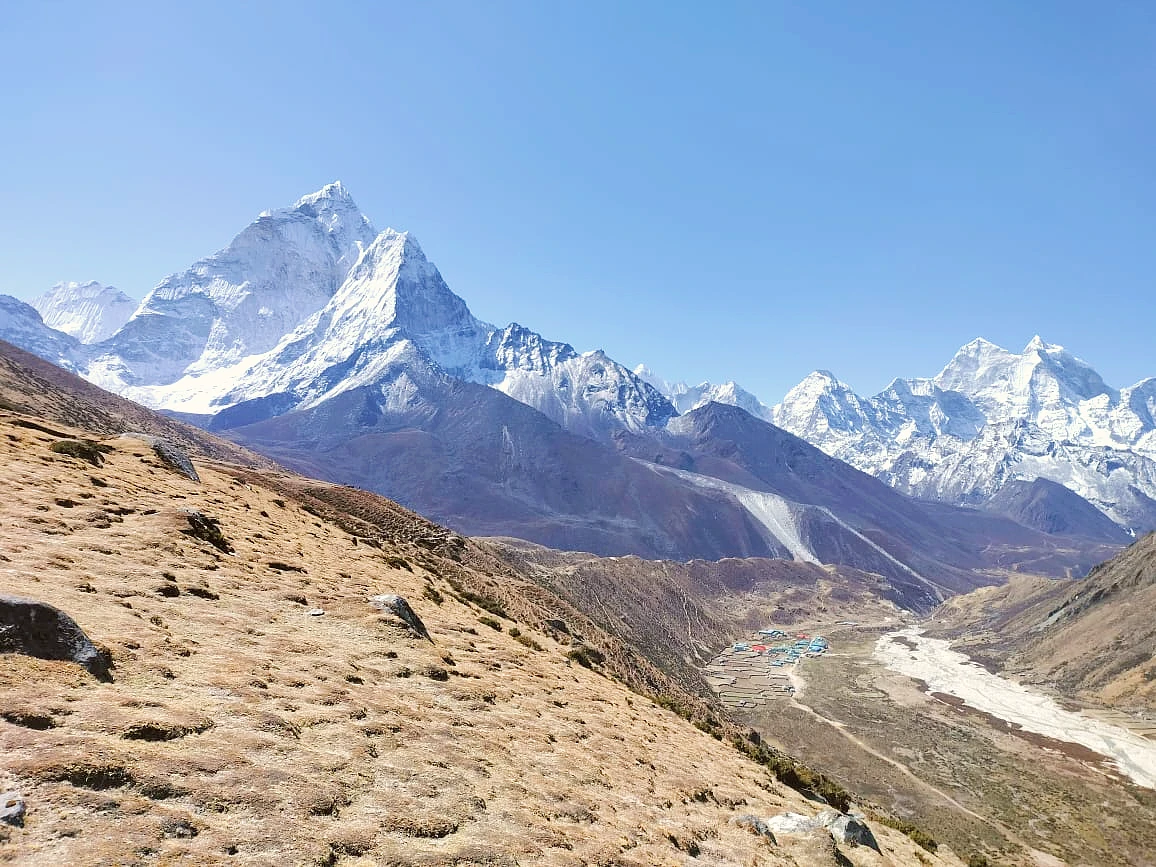
After two days of acclimatization, the route then takes you to the Everest Base Camp. Next early morning we will hike to the Kalapatthar and head back down to the Lobuche. From here on, the Island peak route takes you to the Chukkung village crossing the Kongma-La pass (5,528m). Further, we will trek to the Island base camp where we will spend our night in tented camps. From here our peak climbing expedition starts. The next day we shall rest and prepare for the final push to the summit.
On the 15th day, we summit the Island Peak. Today is the main day of the expedition. It is a 9-12 hours round trip, which will be hard and strenuous but the climb will be rewarding. The stunning view of Ama Dablam, Makalu, Barunste, and Lhotse along with Khumbu Himalaya ranges from the Island peak summit is jaw-dropping. You will get a chance to see this scenery once in a lifetime.
After a successful summit, we will descend down to the Island Peak base camp. With our happy and satisfied hearts, we will trek down to Lukla again and fly back to Kathmandu ending our Everest Base Camp and Island Peak Climbing on a high note.
Essential Pre-Trip Information & Preparation
Permits and Required Documentation for Island Peak Climbing:
Climbers embarking on the Island Peak expedition are required to obtain several permits to ensure legal and safe passage through the region.
These include the Nepal Mountaineering Association Permit Fee, the Sagarmatha National Park Entry Fee, and the Local Area Permit Fee/Pasang Lhamu Rural Municipality permit. To process these permits, participants typically need to provide two passport-sized photographs, a photocopy of their passport, Nepali currency for payment, accurately filled forms, and proof of travel insurance that includes helicopter evacuation coverage. Nepal Peak Adventure streamlines this process by arranging and managing all required permits on behalf of its clients.
Permits Lists:
- Nepal Mountaineering Association Permit Fee
- Sagarmatha National Park Entry Fee
- Local Area Permit Fee/ Pasang Lhamu Rural Municipality
Documents Lists:
To get the Island Peak climbing permits, you will need to provide certain documents. The documents required are as follows:
- 2 passport-sized photos
- A photocopy of your passport
- Nepali currency, which is essential to pay for the permit.
- Accurately filled forms
- Travel insurance (helicopter evacuation included).
The explicit statement that NPA "arranges and manages all required permits" represents a significant service advantage. Navigating the complexities of obtaining multiple permits, such as those from the NMA, National Park, and local municipalities, can be confusing and time-consuming for international travelers unfamiliar with local regulations.
This service substantially reduces the pre-trip logistical burden for clients, offering a more streamlined and hassle-free experience. Highlighting this "behind-the-scenes" facilitation as a core benefit can be a strong selling point, particularly for first-time visitors to Nepal, as it alleviates a common source of stress and uncertainty associated with international expeditions.
Note: Our Company NPA arranges and manages all the required climbing and trekking permits for the Island Peak expedition. Feel free to contact us. WhatsApp: +977 9841319155 (Hom Rana)
Physical Preparation, Training, and Required Climbing Experience:
Island Peak is officially graded as 2B in difficulty, indicating that it is a challenging climb for individuals new to high-altitude trekking but is not categorized as a highly technical mountaineering ascent. It is considered suitable for those possessing a resilient mindset, some prior experience with foot travel in varied terrain, and a good level of physical fitness. While previous climbing experience is advantageous, it is not an absolute prerequisite for joining the expedition.
However, the climb does demand specific technical proficiencies. Essential skills include navigating glaciers, scrambling over rock sections, traversing snow and ice, and demonstrating competence in handling mountaineering equipment such as crampons, ice axes, harnesses, and fixed ropes.
A thorough understanding and practical ability in ascending and descending techniques using a jumar and descender are paramount for safety on the mountain.
Guides typically provide training and guidance on these skills during the expedition. It is important to acknowledge that despite its "trekking peak" designation, Island Peak is indeed a mountaineering peak that commands respect and requires a certain level of mountaineering and prior altitude experience.
The description of Island Peak as "challenging for first-time trekkers but not a technical climb", juxtaposed with the requirement for specific technical skills like using crampons, ice axes, and ascenders, can create a potential misunderstanding for clients. Some might underestimate the actual technical demands. The pre-summit training session conducted at Island Peak Base Camp is therefore critical for bridging this gap in perception, ensuring that clients acquire the necessary practical proficiency before attempting the summit. This training should be emphasized as a vital safety feature and a value-added component that adequately prepares participants for the specific technical aspects of the climb, thereby mitigating risks associated with inadequate skills.
Best Time to Climb Island Peak
One of the best tips to climb Island Peak is proper research on what different seasons there are, which are the best times for the Island Peak climb, and what times are safer.
Among the four seasons in Nepal, Autumn (Sep-Nov) and Spring (March-May) are considered to be the best times for climbing Island Peak. These seasons bring pleasant weather and beautiful landscapes.
Autumn is marked by warm pleasant weather, with no clouds, clear views of the mountains, and little rainfall. The weather during autumn in the mountains is generally clearer and is also considered to be the best season for climbing the island peaks. It is possible that the Autumn season may get a little busy at times, but on the other hand, you can pretty much guarantee you will get optimal weather and climbing conditions. The average temperature in Autumn in the daytime is around 15°C to 25°C and at night and morning is around -10°C.
The Spring season in Nepal is considered a mountaineering season and happens to overlap with Everest mountaineering. So along the route, you are likely to come across a lot of expedition teams heading up to Mount Everest in the months of April and May. In spring you will see the full blossom of flowers and green vegetation along the trail. Daytime is generally warm with temperatures of 17°C to 25°C and at night and morning, it can drop to -10°C to -15°C.
Climbing Island peak in winter is also possible but you should require a lot of mountaineering skills and experience. In winter the temperature in the Island peak drops downs to -25/-30°C.
For more information, check out "Best Time to Climb Island Peak"
How hard is Island Peak Climb?
Island Peak also known as Imja Tse is graded at 2B in difficulty. Summiting Island Peak is challenging for first-time trekkers but is not a technical climb, so anyone with the right mindset, some experience on foot, and a decent amount of fitness is welcome to give it a shot.
Similarly, Island Peak climbing also depends on a climber's fitness, mindset, acclimatization, preparation, experience before the climb, and the weather, not whether it is difficult or easy. If you want to prepare for peak climbing then you should train for at least 6 months or check out " How to train for peak climbing in Nepal".
You do not need to worry much since plenty of beginner climbers have made it all the way to the top before. Make sure you are drinking a lot of fluids to keep your body hydrated which helps to cope with the altitude.
Preparation to climb depends on one's level of fitness and experience with mountaineering. You do not need to get intensive training before you actually ascend, but indulge in cardiovascular exercise, work properly on mountaineering gear, and you will be able to get the best out of this experience.
Gears and Equipment for Island Peak Climb
A proper set of clothing, gear, and equipment is necessary for a successful climb and of course for your safety and comfort. Here is what you should consider packing for Island Peak.
|
Climbing Equipment |
|
| Accessory cord | Ice axe |
| Waist leash | Crampons |
| Climbing harness | Standard carabiners |
| Belay Device | Trekking poles |
| Ascender | Descender / Super 8 |
|
Clothing (Body, Head, Hand, Foot Wear) |
|
| Waterproof shell jackets | Waterproof shell pant |
| Down vest and jacket | Casual trekking clothes |
| Wind shirt | Glacier shirt |
| Liner gloves | Softshell gloves |
| Insulated shell gloves | Mittens |
| Wool or synthetic socks | Trekking boots |
| Mountaineering boots | Gaiters |
| Warm hat | Sun hat |
| Ski goggles | Sunglasses |
| Headscarf | Buff |
| Climbing helmet | Headlamp |
|
Other Equipment |
|
| Small pack | Warm sleeping bag |
| Waist leash | Inflatable sleeping mat |
| Water bottle and cover | Pee bottle |
| Toiletries | Sun protection cream |
| Solar panel and power bank | First aid kit |
Note: You can get all the above-listed items in Thamel. You can buy or rent it.
Check out the Essential gear for Island Peak Climbing in detail.
Island Peak Climbing Map
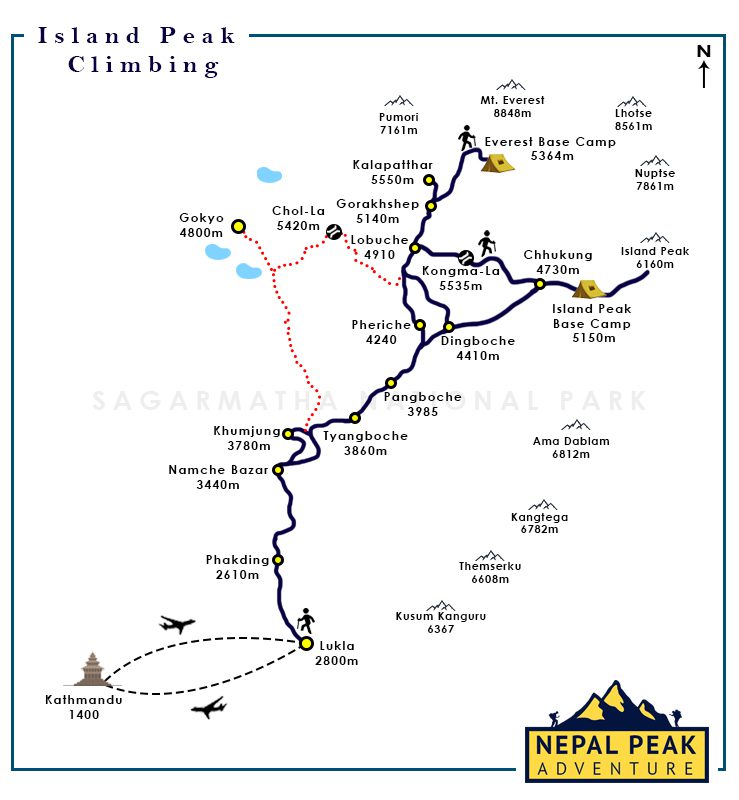
We guarantee your departure on the date of your choice and are flexible to amend the itinerary at your convenience. With the help of a local professional team, Nepal Peak Adventure guarantees to make your trip unforgettable and memorable offering you multiple experiences in a single trip. Check out more detail about "Island Peak Map" with Nepal Peak Adventure.
Recommended training and fitness preparations
To adequately prepare for climbing Island Peak, it's important to focus on both cardiovascular endurance and strength training. Engage in activities such as running, cycling, or swimming to improve your cardiovascular fitness. These exercises will help build your stamina and prepare you for the physical demands of the climb.
We have an article about "Island Peak Climbing Difficulty & How to tackle it" if you want more information>
In terms of strength training, emphasize exercises that target your legs, core, and upper body. Squats, lunges, and step-ups will help strengthen your legs, while planks and sit-ups will contribute to core stability. Additionally, incorporate upper body exercises such as pull-ups and push-ups to improve your overall strength.
Consider including regular hiking or trekking trips in your training routine to simulate the conditions you'll encounter during the climb. This will help condition your muscles and joints for long hours of walking and carrying a backpack.
We also have "How to train for Peak Climbing: Tips from the Pros" if you want to dive deeper into a fitness program.
ISLAND PEAK ALTITUDE PROFILE
The typical Island Peak itinerary starts with a scenic flight from Kathmandu to Lukla, followed by a trek to Namche Bazaar, the gateway to the Everest region. From Namche Bazaar, climbers continue their journey towards the picturesque village of Dingboche, where they spend a couple of days acclimatizing to the altitude.
After the acclimatization period, climbers proceed towards Island Peak Base Camp (4,970 meters/16,305 feet). This is a significant milestone on the journey, as it serves as the starting point for the climb. The base camp offers stunning views of the surrounding Himalayan peaks and provides climbers with an opportunity to rest and prepare for the summit push.
From the base camp, climbers ascend to High Camp (5,400 meters/17,716 feet), which is situated on a rocky ridge. The trail from the base camp to High Camp involves traversing glacial terrain, crossing crevasses, and using fixed ropes for safety.
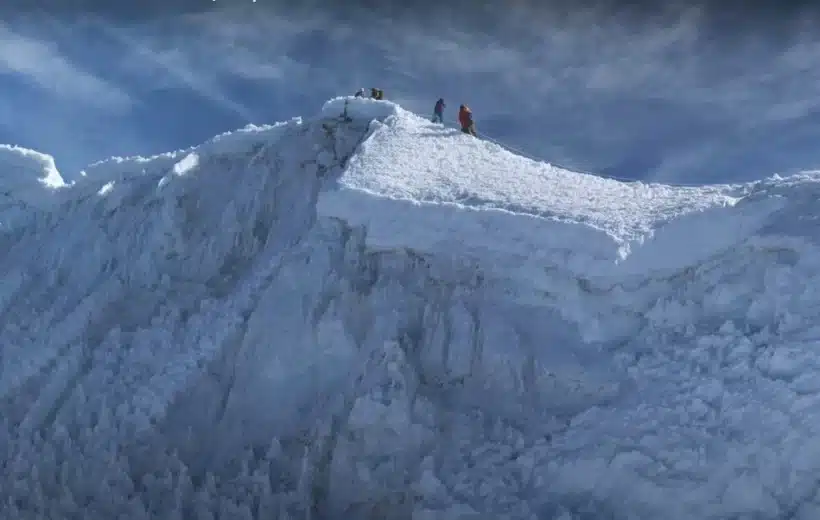
After a night's rest at High Camp, climbers set out early in the morning for the summit push. The final ascent to the peak involves navigating a steep snow and ice slope. Climbers may encounter sections of fixed ropes, requiring the use of proper climbing techniques and equipment.
Upon reaching the summit of Island Peak, climbers are rewarded with breathtaking panoramic views of the surrounding peaks, including the majestic Mount Everest. It is an exhilarating and awe-inspiring experience that makes all the efforts and challenges worthwhile.
Acclimatization and altitude sickness prevention
Acclimatization is a crucial aspect of climbing Island Peak to reduce the risk of altitude sickness. It's important to allow your body time to adapt to the decreasing oxygen levels as you ascend to higher altitudes.
During the climb, it's recommended to follow a gradual ascent profile, spending a few days at intermediate elevations to acclimatize. This allows your body to adjust to the changing conditions and minimizes the risk of altitude-related illnesses.
While acclimatizing, it's essential to stay well-hydrated by drinking plenty of water. Avoid alcohol and caffeine, as they can contribute to dehydration. Maintain a nutritious diet, with an emphasis on carbohydrates and high-calorie foods, to provide your body with the energy it needs at higher altitudes.
It's crucial to monitor your body for any signs of altitude sickness, such as headaches, nausea, dizziness, or difficulty breathing. If you experience these symptoms, it's important to descend to a lower altitude immediately to seek medical attention if necessary. Follow the proper guide to Acclimatization for peak climbing for more details.
ISLAND PEAK ACCOMMODATION
Accommodation during the trek is provided in comfortable lodges run by local families. These lodges have communal areas with stoves, while the bedrooms are unheated with two beds, mattresses, and blankets. Showers powered by gas and flush toilets are available in most lodges. At Island Peak base camp, camping in mountain tents is the norm, with two persons per tent. Climbers should bring a 4-season sleeping bag and sleeping mat.
Food on the trek is of high quality and offers a mix of local Nepali/Sherpa dishes and Western recipes. You can enjoy meals like burgers with chips or dal bhat with rice, along with a variety of snacks, drinks, and treats available at the lodges and shops along the way. It's important to maintain a balanced diet during the trek, and while there are temptations like pastries, beer, and deep-fried Mars bars, sticking to a simple diet of rice and dal can be beneficial.
At Island Peak base camp, camping will be the accommodation option. Mountain tents are provided, usually accommodating two people per tent. Make sure to bring a four-season sleeping bag and a good-quality sleeping mat. For lower altitudes, you may consider using a sleeping bag liner along with a partially unzipped four-season bag to regulate temperature.
During the expedition, porters will carry your main bag, up to a maximum weight of 15 kilograms, and meet the group's needs. You will also have a guide and climbing guide with you throughout the journey to ensure your safety and well-being.
Cultural experiences and interactions with local Sherpa communities
One of the most enriching aspects of trekking in the Everest region, including Island Peak, is the opportunity to engage in cultural experiences and interact with the local Sherpa communities. The Sherpas are an indigenous ethnic group native to the Himalayan region of Nepal and have a deep-rooted connection to the mountains.
During your trek to Island Peak, you'll have the chance to visit several Sherpa villages, such as Namche Bazaar, Khumjung, and Pangboche, which are dotted along the trail. These villages offer a glimpse into the unique Sherpa way of life, their traditions, and their rich cultural heritage.
The Sherpa people are known for their warm hospitality, and you'll have the opportunity to meet and interact with them during your journey. You can engage in conversations, learn about their daily routines, and gain insights into their beliefs and customs. The Sherpas have a rich history of mountaineering and have played a significant role in supporting expeditions to the world's highest peaks, including Mount Everest.
In the Sherpa villages, you'll have the chance to visit monasteries and ancient Buddhist temples, which are an integral part of Sherpa culture. These sacred sites are adorned with colorful prayer flags, intricate artwork, and religious artifacts. You can witness traditional Buddhist rituals and ceremonies, and even receive blessings from the resident monks.
Trekking through the Sherpa heartland also allows you to experience their unique cuisine. You can savor traditional Sherpa dishes, such as dal bhat (a lentil soup with rice), Sherpa stew, momos (dumplings), and butter tea. Sharing meals with the Sherpa families not only provides a chance to taste the local flavors but also fosters cultural exchange and creates lasting memories.
By immersing yourself in the Sherpa culture and engaging in meaningful interactions, you'll gain a deeper appreciation for the local way of life and the challenges they face living in the harsh mountain environment. These interactions can be an incredibly rewarding part of your Island Peak trek, as they offer a glimpse into a world steeped in tradition, resilience, and profound respect for the mountains.
It's important to approach these cultural experiences with respect and sensitivity, honoring the local customs and traditions. Engaging in responsible tourism practices, supporting local businesses, and contributing to community initiatives can help ensure that these cultural exchanges continue to benefit both visitors and the Sherpa communities for generations to come.
FAQ
What Boots Should I Wear on Island Peak?
Choosing appropriate mountaineering boots is crucial for a successful climb. Opt for sturdy, insulated boots with good ankle support and a durable sole. Ensure they are comfortable and properly broken in before your expedition.
How Difficult Is Mera Peak?
Mera Peak, another popular climbing destination in Nepal, is considered more challenging than Island Peak. It stands at an elevation of 6,476 meters (21,247 feet) and demands advanced mountaineering skills and a higher level of physical fitness.
What Is the Cost of Climbing Island Peak?
The cost of climbing Island Peak varies depending on several factors, such as the trekking agency, services included, group size, and additional expenses like permits and equipment rental. Nepal Peak Adventure offers $2640 for Island Peak Climbing.
How Long Does It Take to Climb Island Peak?
The duration of Island Peak climbing depends on the chosen itinerary and the climber's pace. Typically, it takes around 16 to 18 days for a comprehensive trek, including acclimatization days, reaching the summit, and descending back to Lukla.
Is Island Peak Climbing Difficult?
Island Peak climbing is considered moderately challenging. It requires a reasonable level of fitness and basic mountaineering skills. However, with adequate physical preparation, training, and proper acclimatization, it is attainable for climbers with varying levels of experience.